

Key Takeaways
- A private bank career can grow fast if you stay consistent and learn the role well.
- Promotions in a private bank career usually depend on performance, not only on years.
- Many people start with entry roles and build a solid private bank career in 3–5 years.
- Income improves as your responsibility increases in a private bank career path.
- Training helps freshers start stronger and stay longer in a private bank career.
Introduction
A private bank career can be a strong long-term option if you want steady growth and clear career ladders. But it’s not for people who want slow work with no targets. Private banks reward performance, learning, and consistency. This blog explains how a private bank career grows over time, what stability looks like, how pay improves, and how freshers can build a real future in this field.
Why a Private Bank Career Offers Strong Long-Term Growth
A private bank career offers growth because the sector keeps expanding services like digital banking, loans, cards, and customer support. Banks need people at every level—front office, sales, operations, and relationship roles.
If you stay disciplined, your work directly impacts your progress. That’s why a career in private banks often feels faster than many other fields. You don’t have to wait for a vacancy for years. Performance is noticed early.
Private Bank Career Development: How Professionals Move Up
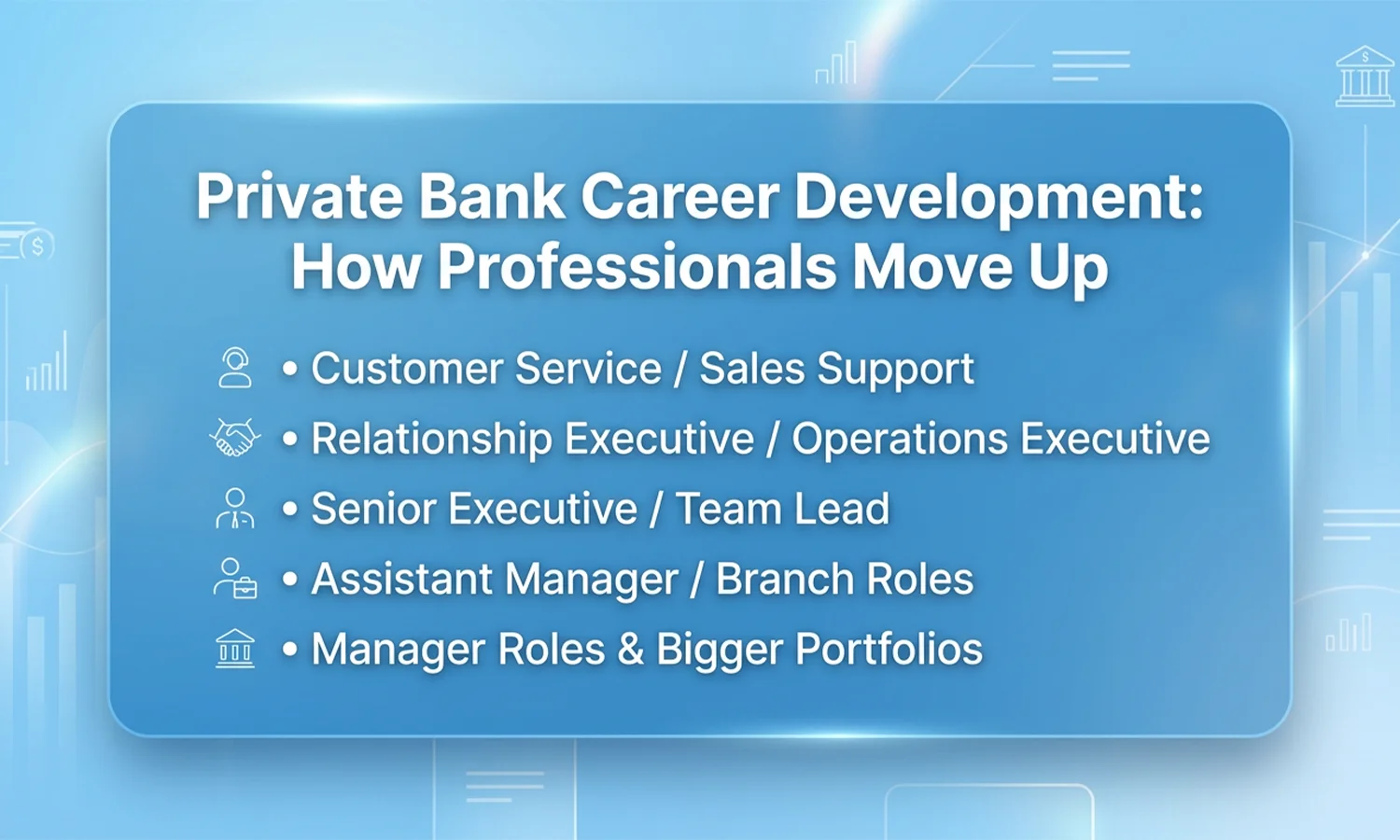
Most professionals start with beginner roles and move step by step. A typical path looks like this:
- Customer service/sales support
- Relationship executive/operations executive
- Senior executive/team lead
- Assistant manager/branch roles
- Manager roles and bigger portfolios
This is why people call it a strong bank career option. Private banks often have internal targets and learning programs that help you move up if you are consistent.
Career Stability and Future Scope in the Private Banking Sector
Stability in a private bank career comes from two things: skills and performance. If you build strong customer handling, system comfort, and product knowledge, you become valuable. Even if you switch banks, your skills transfer well.
Hiring also stays active throughout the year because banks need people in many branches. That’s why you often see a Bank Job Vacancy for entry and mid-level roles. But stability becomes stronger when you move from beginner roles into core branch roles and bigger responsibilities.
Income Growth and Promotion Timelines in Private Banks
Freshers often ask about pay. In private banks, pay grows as your responsibilities grow. Early roles may have a lower fixed salary but incentives in sales-linked roles. Over time, you can move into roles with higher fixed pay and better benefits.
This is why private bank jobs salary varies a lot. Two people can work in the same bank but earn differently based on role type, performance, and location. For many, a private bank career becomes financially rewarding when they move into relationship or portfolio roles.
To Know More About Phone Banking officer Click the Link :What Is Phone Banking? Meaning, Services and Examples
How Role-Based Banking Training Supports Long-Term Career Growth
Many freshers join banking but struggle in the first months because they don’t understand real branch work. Role-based training helps you avoid that early confusion. A banking course can improve your basics—KYC, accounts, customer handling, and digital processes—so you start with more confidence.
A structured path, like a Job Assured Banking Program, can also support freshers after graduation by preparing them for real work expectations. That helps people stay longer and grow faster. This is useful for candidates looking at private bank jobs after graduation because early role clarity improves performance and retention.
If you want to enter through entry-level bank jobs, focus on strong basics and professional behavior from day one. Also, make sure you meet the eligibility for private bank jobs like graduation, document readiness, and language comfort.
Conclusion
A private bank career is a good long-term choice if you want steady growth and you are ready to learn, adapt, and perform. The early stage needs effort, but the career path becomes clearer once you build skills and confidence. Start with the right role, improve your basics, and choose training if you need support. Over time, you can build a stable and rewarding banking journey.
FAQs
Yes, a private bank career can offer steady growth if you perform well and keep learning.
In a private bank career, growth can be seen in 1–3 years when performance and role learning are strong.
A private bank career needs communication, customer handling, product knowledge, and consistency.
Yes, freshers can start with entry roles and build a long private bank career with training and performance.

