

Overview
Key Takeaways
- The collection executive meaning centres on recovering overdue dues while keeping the customer relationship intact wherever possible.
- What does a collection executive do? Their work covers calling, visiting, negotiating, and updating recovery records inside a CRM system.
- The role of collection executive varies slightly by employer but always includes a recovery target and a reporting structure.
- Understanding collection officer meaning helps candidates avoid confusion, since the titles are frequently used for the same job.
- Freshers can enter this collection executive work track without prior BFSI experience if they arrive with basic training.
Collection Executive Meaning, Explained Simply
The collection executive meaning is straightforward. It is a person employed by a bank, NBFC, or recovery agency whose main responsibility is to follow up with customers who have not paid an EMI, credit card bill, or loan instalment on time and to work out how and when they will pay.
What Is Collection Executive Work in Practice
The description of a collection executive job almost always mentions a monthly recovery target, since performance in this role is measured primarily by how much of the overdue amount actually gets collected.
The Broader Role of a Collection Executive
This is also where the job connects to compliance. Executives are expected to follow RBI-aligned fair practice guidelines around calling hours, tone, and frequency of contact, which is a topic covered early in most structured training programs.
Collection Officer Meaning and How It Differs
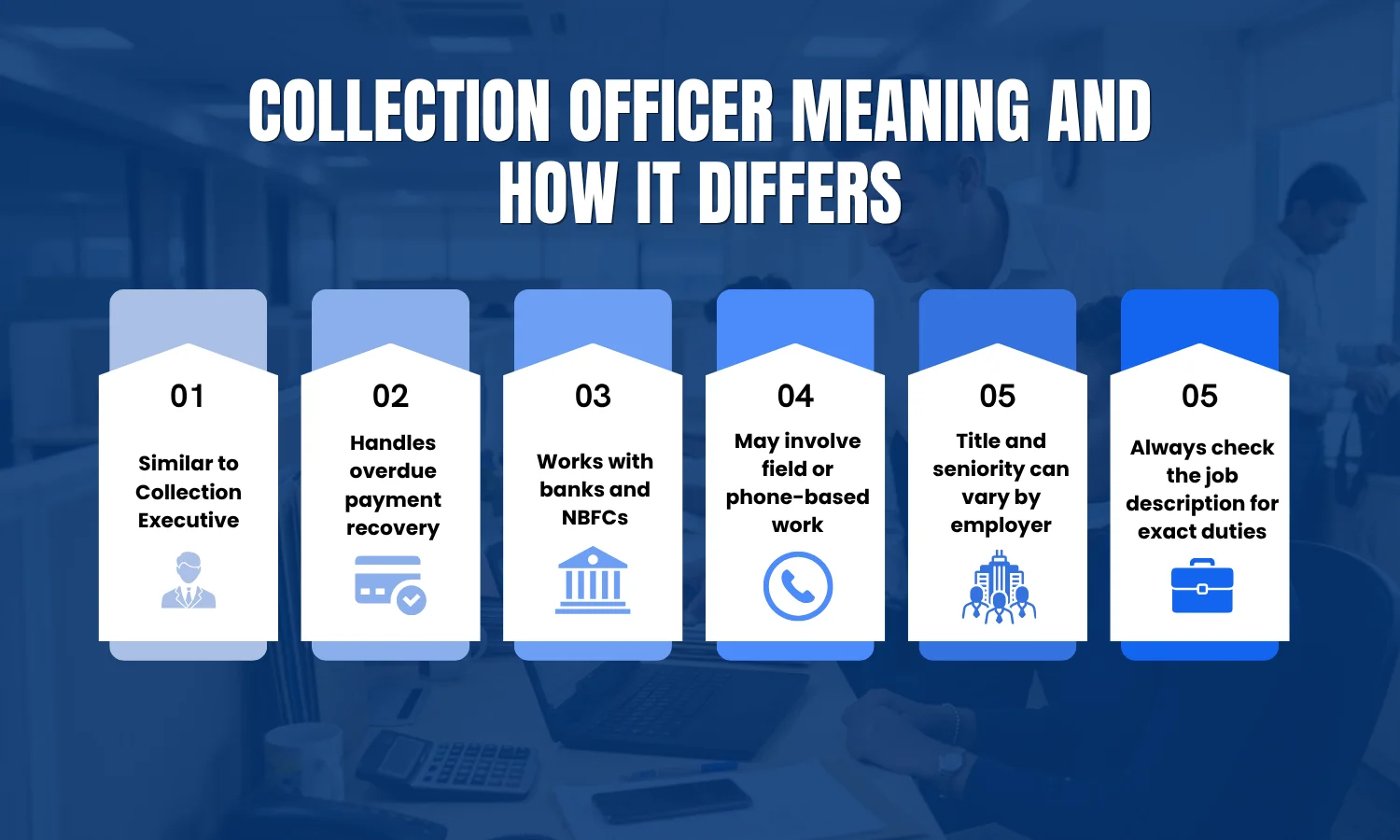
Job seekers often search for “collection officer meaning” separately, assuming it is a different job. In most banks and NBFCs it describes the same core work as a collection executive, though the officer title can sometimes carry slightly more seniority or a supervisory element over a small team.
Turning This Understanding Into a Job Offer
For anyone who now understands the collection executive meaning and wants a direct path into the role, srmsb.com outlines the current bank orientation batch and its placement partners.
FAQs
In a bank, “collection executive” meaning refers to a staff member or contracted employee responsible for following up with customers whose loan or card payments are overdue and working toward recovery of that amount.
The two titles are largely interchangeable across most employers, though “recovery executive” is sometimes used specifically for accounts that are further overdue and closer to being written off.
Sales experience is not mandatory, but the negotiation and persuasion skills built through sales roles transfer well, which is why some employers view sales backgrounds favourably during hiring.
No specific qualification is required to understand or apply for a collection executive role, though a graduation degree and basic training in call handling and CRM tools make the transition into the job noticeably smoother.

