
Overview
Key Takeaways
- Collection executive jobs span field visits, tele-calling, and digital recovery work across banks, NBFCs, and fintech lenders.
- Most entry-level postings do not require prior experience, but clear communication and basic finance awareness help candidates get shortlisted.
- BFSI hiring in India is projected to grow at close to 8 to 9 percent year on year through 2027, which keeps recovery and collection roles in steady demand.
- Pay usually starts modest and climbs with tenure, portfolio size, and recovery performance.
- Structured, placement-linked training can shorten the time between applying and actually getting hired.
What a Collection Executive Job Actually Involves
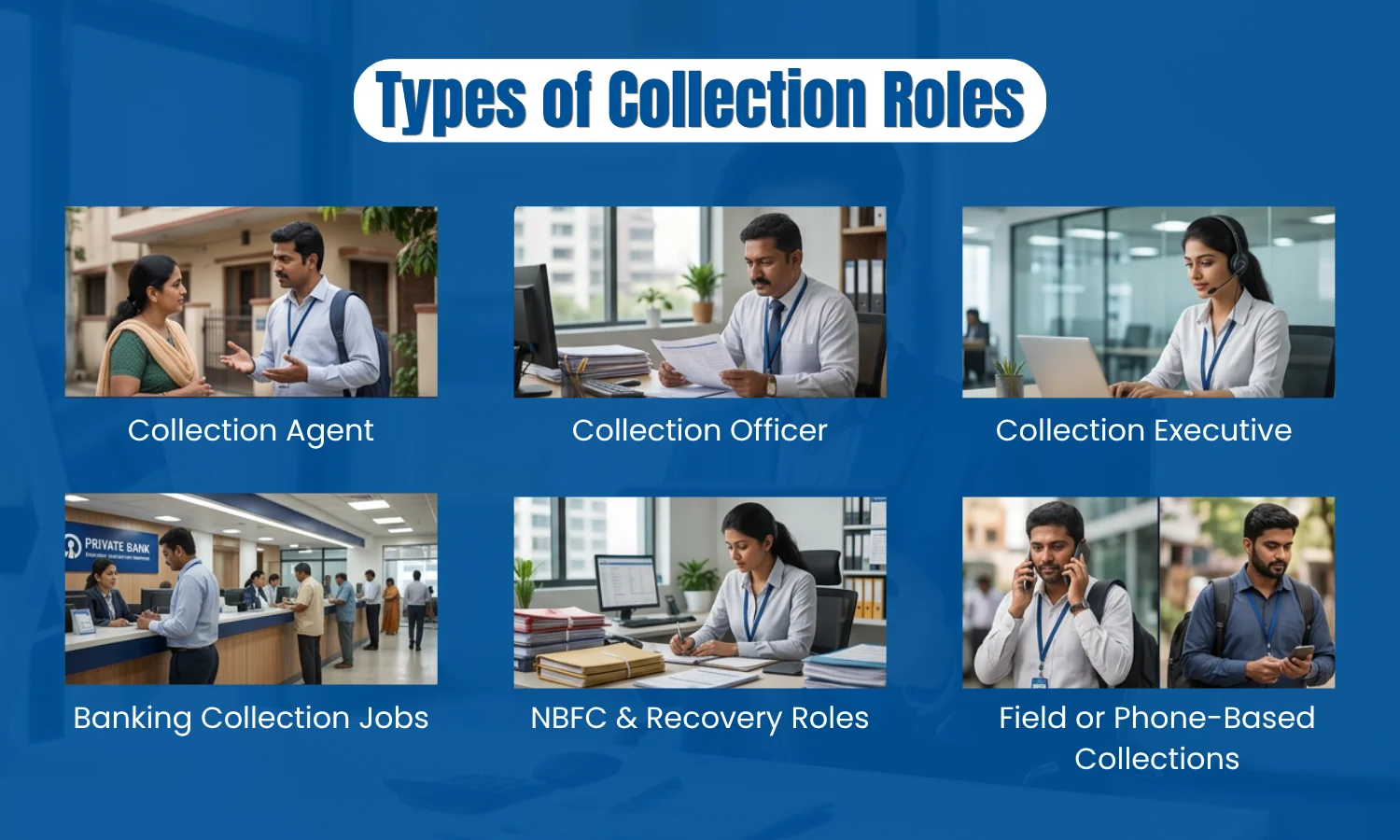
Types of Roles You Will Find Advertised
Salary Expectations for Fresh and Experienced Candidates
Where the Openings Are Concentrated
Building a Real Collection Executive Career
SRM SB runs placement-linked training built around real hiring needs at private banks and NBFCs, so the skills you learn map directly to what recruiters test for. If steady, recruiter-linked entry into collection executive jobs is what you are after, srmsb.com has details on the current training batch and its hiring partners.
FAQs
Yes. Most banks and NBFCs hire freshers into entry-level collection roles and provide product and calling training on the job. Candidates who arrive with some prior exposure to CRM tools and call handling tend to clear interviews faster and settle into the role sooner.
The titles are often used interchangeably by employers, though a collection agent may work through a third-party recovery agency while a collection executive is more commonly hired directly by the bank or NBFC. Job responsibilities on both sides remain largely similar.
A graduation degree in any stream is preferred by most employers, though some entry-level and field-based postings accept candidates with a strong 12th standard result and good communication skills. Finance or commerce backgrounds are viewed favourably but are rarely mandatory.
Placement timelines vary by program and hiring cycle, but candidates who complete structured, placement-linked training with direct recruiter access typically move through interviews faster than those applying cold through job portals.

