
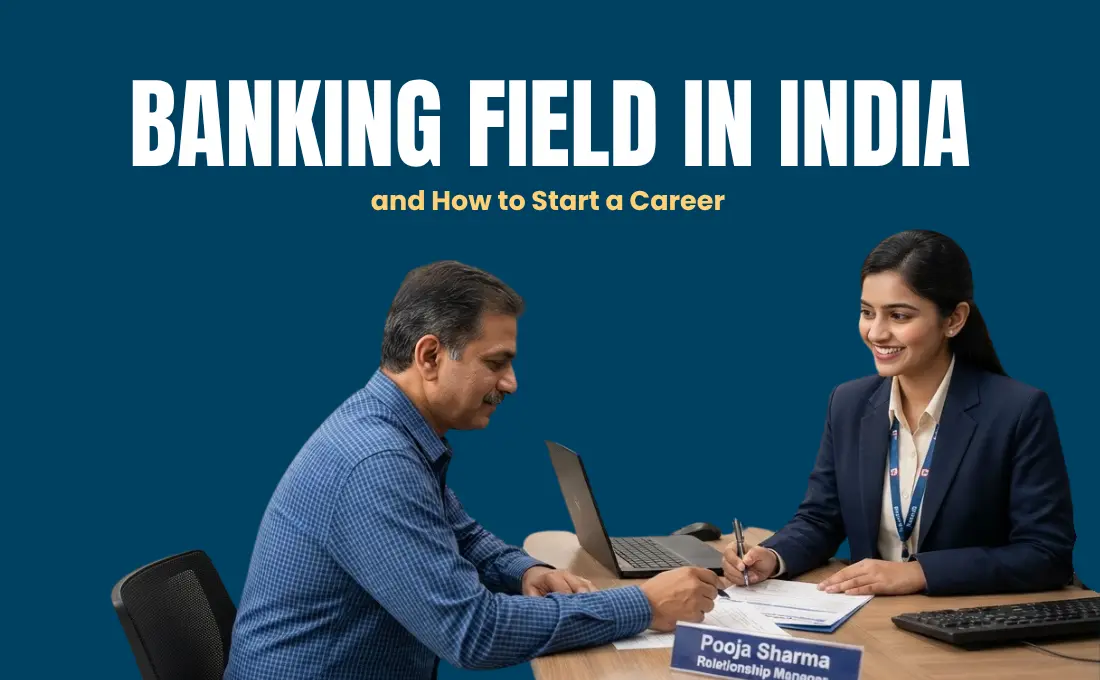
Banking Field in India and How to Start a Career

Banking Field in India and How to Start a Career

Overview

The banking field covers public sector banks, private banks, small finance banks, cooperative banks, and regional rural banks, along with support roles in operations, credit, sales, and technology. Graduates from any stream can enter through bank exams, direct hiring, or job-focused training programs. Each route has its own steps.

What Does the Banking Field Include?

The banking sector in India is regulated by the Reserve Bank of India, which was set up in 1935. After the nationalisation of 14 large banks in 1969, public sector banks became the backbone of lending, and private and small finance banks have since added choice and competition.

Reach has grown too. Under the Pradhan Mantri Jan Dhan Yojana, more than 50 crore accounts have been opened, which shows how far banking services now extend into smaller towns and villages. This reach makes the banking industry in India a steady employer of graduates.
Training and discipline shape life inside a bank. New joiners learn procedures for cash handling, account opening, and customer verification, and these routines carry over from one bank to another. That is why experience in the first two years travels well across employers.
Cooperative banks deserve a mention too. They serve savers and small borrowers in towns and villages, and many hire locally. Small finance banks, set up to reach people outside the focus of large lenders, have grown into active recruiters for field and branch roles.

Banking Field Jobs for Freshers and Their Entry Routes

Banking field courses range from short certificates to postgraduate diplomas. Pick one that teaches retail products, KYC and compliance, digital banking and communication, and ask what share of learners actually get placed. Mock interviews and on-the-job exposure matter as much as theory.

The third route is a job-focused training program that places graduates with banks after a few months of learning. Entry roles usually involve customer handling, account opening, KYC checks, and basic product sales.

Technology has changed daily work too. Mobile apps, UPI, and digital lending now handle many simple tasks, which leaves staff free to deal with advice, complaints, and sales in the banking field. Graduates who are comfortable with apps and data have a clear edge.

Which Banking Field Courses Are Worth Doing?
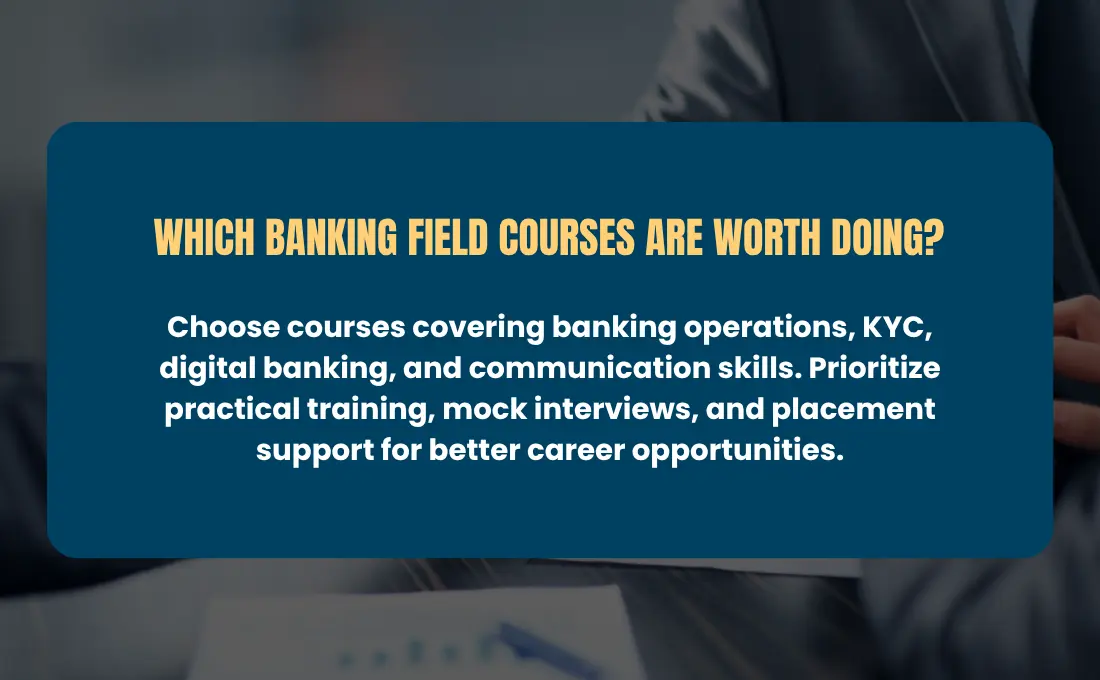
Which Banking Field Courses Are Worth Doing
Banking field courses range from short certificates to postgraduate diplomas. Pick one that teaches retail products, KYC and compliance, digital banking and communication, and ask what share of learners actually get placed. Mock interviews and on-the-job exposure matter as much as theory.

Once you are working, the JAIIB and CAIIB exams from the Indian Institute of Banking and Finance add depth and support promotion in many banks.

Location also affects the experience in the banking field. Metro branches handle high transaction volumes and corporate clients, while small-town and rural branches give a wider view of lending, agriculture, and small business. Both teach useful lessons, so keep an open mind when postings arrive.

Short courses work well for working graduates, while longer diplomas suit those who can commit a full year. Compare the fees against the placement record, and avoid programs that cannot name the employers who hired their students.

Choosing a Banking Field Project and Planning a Banking Career

A banking field project gives students something real to discuss in interviews. A small study on digital payment habits in your locality or on the steps in a loan approval works well, and it shows curiosity beyond textbooks.

A banking career grows in stages. Most people start in customer facing or operations roles, then move into sales, credit, risk, or branch leadership as skills and certifications build up. Patience in the first two years usually pays off.

Competition for good roles is real, but preparation narrows the gap. Reading about banking news, practising interview answers, and keeping your documents ready all help. Small habits like these separate serious candidates from casual ones.

Start Your Place in the Banking Field

If you want a clear route into private sector banking, SRM SB (School of Banking) offers a Placement Assured Program for graduates from any discipline. It combines classroom sessions, online modules, and on-the-job training, followed by interview preparation and placement support for roles such as relationship manager, phone banking officer, and sales executive. So, check your eligibility and apply today at SRM SB.

Key Takeaways

  • The banking field offers public sector, private, and cooperative routes for graduates.
  • Freshers can enter through exams, direct hiring, or job-focused training.
  • Choose courses that cover products, compliance, digital banking, and communication.
  • A small project on real banking activity strengthens your interview answers.
  • Early years in customer facing roles build the base for later growth.

FAQs

Graduates from any discipline can enter through exams or direct hiring. Commerce and finance backgrounds help, but they are not compulsory. Communication skills, numerical comfort, and a willingness to learn products matter more at the entry stage.
No. Exams lead to public sector jobs, but the sector also hires through private banks, NBFCs, and training programs that connect graduates with employers. Each route has different selection steps, so choose the one that fits your timeline.
Pay depends on the bank, role, city, and any incentives. Public sector notifications publish pay scales, while private employers state a cost to company figure at the offer stage. Always check the latest notification or offer letter.
Clear communication, honesty with customers, basic numeracy, and comfort with digital tools matter most. Anyone in banking also needs patience, since daily work involves rules, documents, and repeated checks. Skills improve quickly with training, so do not worry if you start with only the basics.
Look at the syllabus, faculty experience, practical training, and placement support. A good course should show how it connects learners to employers and what roles past students have taken up.
Select the fields to be shown. Others will be hidden. Drag and drop to rearrange the order.
  • Image
  • SKU
  • Rating
  • Price
  • Stock
  • Availability
  • Add to cart
  • Description
  • Content
  • Weight
  • Dimensions
  • Additional information
Click outside to hide the comparison bar
Compare