

Introduction
Most people use a bank every day without thinking about what kind of bank it is. Yet the financial system in India is built from several distinct institutions, and each one exists for a different reason. Understanding the types of banks is the first real step toward understanding how money moves through the economy. Whether you are a student, a working professional, or someone planning a future in finance, knowing how these institutions differ will help you see the bigger picture with far more clarity. This guide breaks down each category in plain language and shows why the structure matters.
What a Bank Does and Why Categories Exist
The Main Types of Banks in India
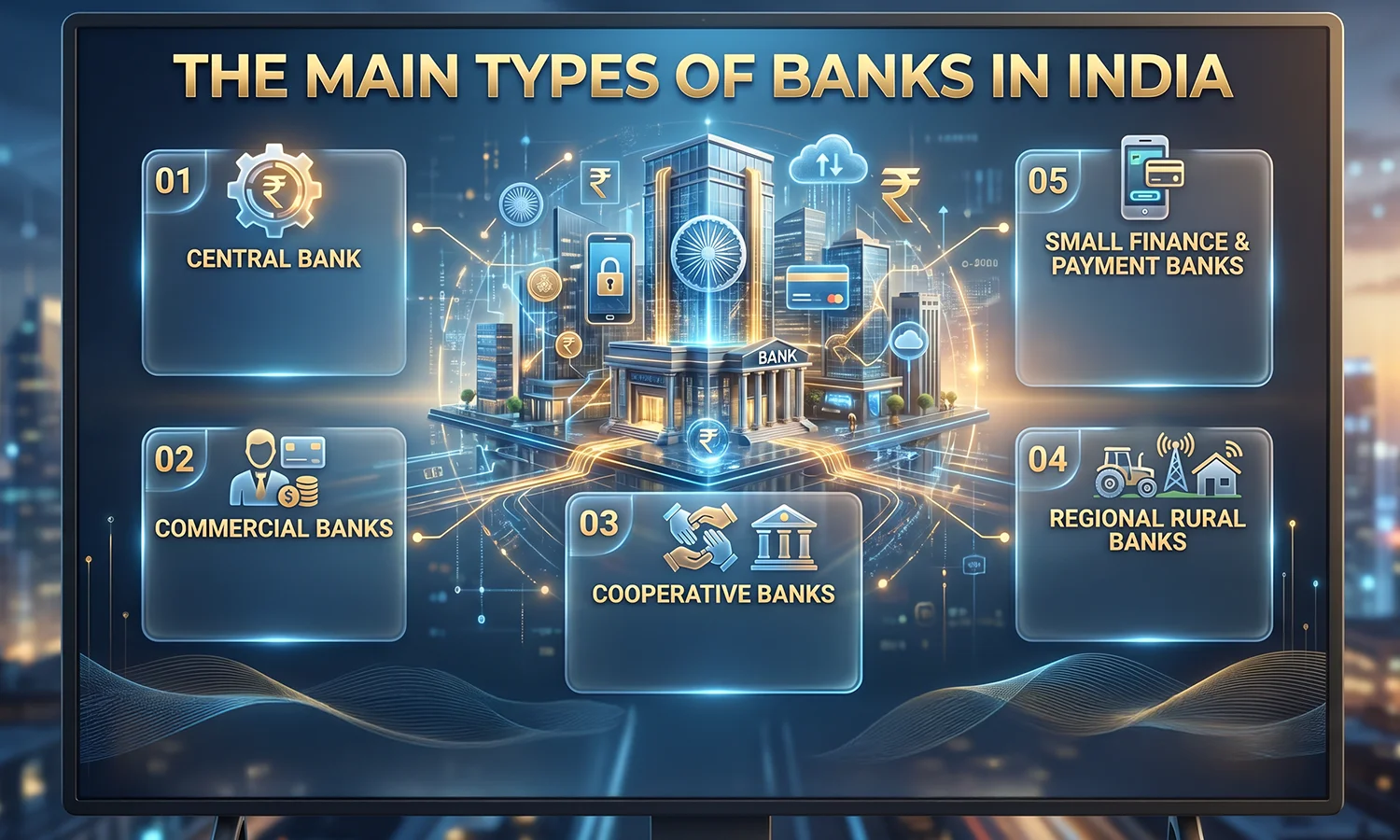
The types of banks in India can be grouped into a few clear categories. At the top sits the central bank, which supervises the entire system. Below it are the banks that the public deals with directly. The structure includes the following groups:
- Central bank: the regulator and supervisor of the whole banking system
- Commercial banks: serve individuals and businesses with deposits and loans
- Cooperative banks: member owned banks that serve local communities and small borrowers
- Regional rural banks: focused on rural credit and farming needs
- Small finance and payment banks: newer formats built for financial inclusion and digital payments
What Is a Commercial Bank?
Functions of Commercial Banks
- Accepting deposits through savings, current, fixed, and recurring accounts
- Lending money as personal, business, home, and vehicle loans
- Offering payment services such as cards, cheques, and online transfers
- Creating credit by turning deposits into fresh loans that expand the money supply
The Role of the Central Bank
Sitting above every commercial bank is the central bank, which in India is the Reserve Bank of India. The functions of central bank are very different from those of an ordinary bank because it does not serve the general public at all. Instead, it manages the currency, guides interest rates, and protects the stability of the whole system.
- Issuing and managing the national currency
- Setting monetary policy and benchmark interest rates
- Supervising and licensing all other banks
- Acting as the lender of last resort during a crisis
Why Knowing the Types of Banks Helps Your Career
For anyone building a career in finance, understanding the types of banks is more than an exam topic. Each category hires for different roles and rewards different strengths. A commercial bank often needs strong service and relationship staff, while a rural bank values knowledge of local lending. Knowing where you fit helps you choose the right training and aim at the right opportunities. A clear grasp of the structure also makes you a more confident professional from your very first day on the job.
How These Banks Work Together
A Quick Way to Remember the Categories
India’s banking system works because each institution has a defined job. From the central bank that shapes policy to the commercial banks that serve millions of customers, every layer supports the next. Once you understand these categories, the financial world becomes far easier to read and far less intimidating. To learn more about banking concepts and professional growth in the BFSI sector, visit srmsb.com for more.

