

Overview
Open banking is a system that lets customers share their financial data with approved third parties through secure interfaces. It allows lenders, apps, and advisors to offer faster loans, better budgeting, and more personal products, while the customer stays in control through consent. Banks and fintech firms use it widely.
What Is Open Banking?
How the Open Banking System Works
For banks, the model brings competition and cooperation at the same time. A bank may lose some customer attention to a nimble app, yet it can also win new customers by partnering with that app. Smart institutions plan for both outcomes.
How Does Open Banking in India Work?
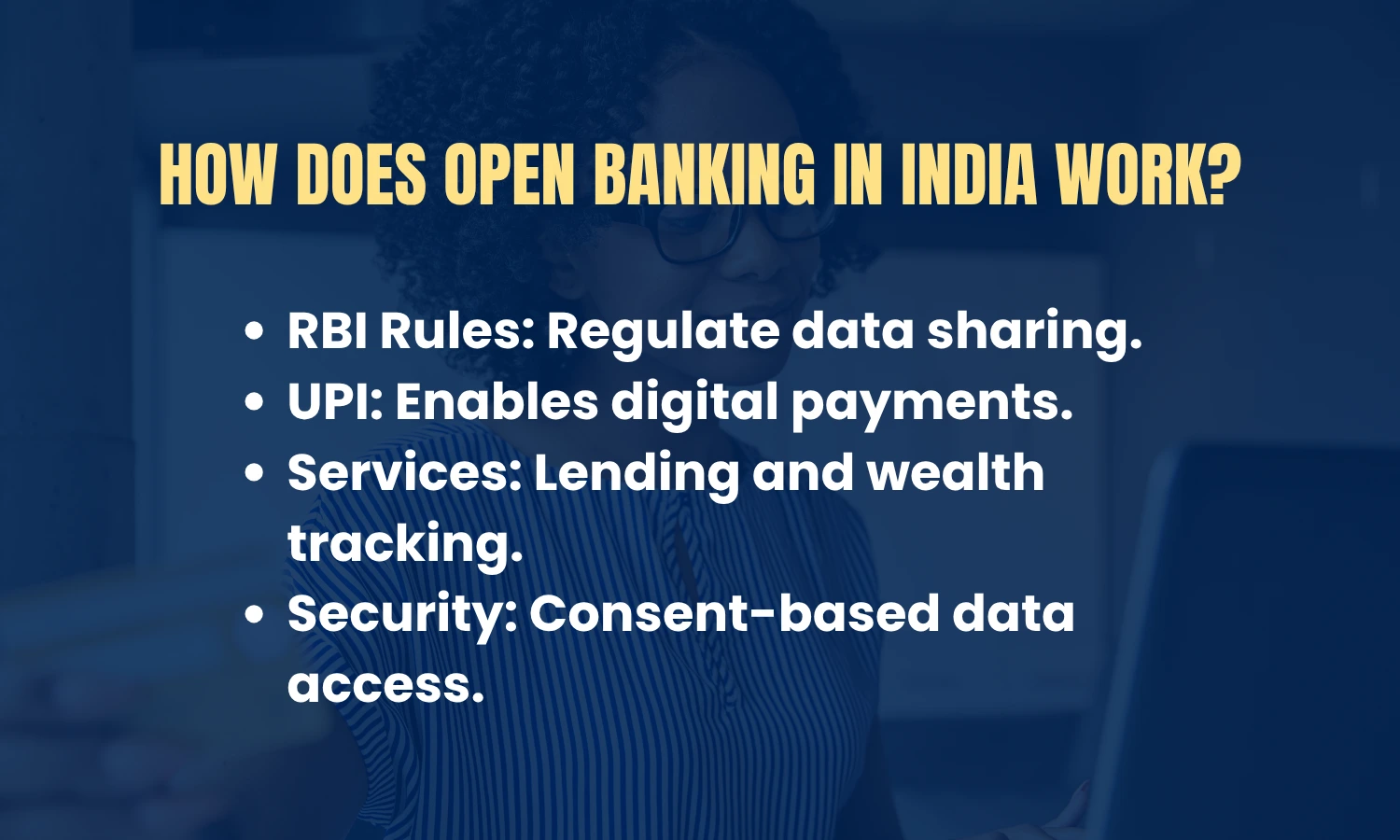
Strictly speaking, India follows a consent-based model rather than a single law. The Reserve Bank of India issued Account Aggregator rules in 2016, and the first aggregators went live in 2021. The industry body Sahamati supports adoption.
Alongside this sits UPI, which now handles more than 20 billion transactions in a month. Together they power open banking services such as digital lending, wealth tracking, and insurance onboarding. The Digital Personal Data Protection Act of 2023 adds rules on consent and data use.
Security remains the main concern. Providers must follow strict standards, report incidents, and keep records of every consent. Staff who understand these rules are valuable to any bank or fintech firm.
Open Banking Benefits and the Future of Open Banking
- Faster credit decisions
- Wider choice for customers
- Lower paperwork for lenders
Prepare for the Next Wave of Banking Careers
As banks adopt open banking, they need graduates who understand products, compliance, and digital channels. SRM SB (School of Banking) covers digital banking and fintech fundamentals within its Placement Assured Program, along with core banking, regulation, and interview preparation. Visit srmsb.com, check your eligibility, and apply today to work toward roles in retail banking, sales, and customer engagement.
Key Takeaways
- Open banking lets customers share data with approved providers through consent.
- APIs and consent platforms make the system work without sharing passwords.
- India uses Account Aggregators and UPI instead of one single open banking law.
- Faster credit and better choice are the visible benefits for users.
- Banking graduates with digital and compliance knowledge will be in demand.

