

The rapid rise of UPI in India has transformed the way people make payments, disrupting traditional banking and reshaping the BFSI sector. Digital payments are no longer a convenience but a necessity, powering everything from small merchant transactions to large corporate payments.
For professionals and graduates, understanding what is upi and how this transformation works means unlocking a surge in demand for new skills and opportunities in the BFSI jobs market. At SRM School of Banking, the focus is on preparing students for this digital-first era, ensuring they can confidently step into roles shaped by fintech, technology, and customer-centric banking.
Rise of UPI and Digital Payments in India
- Ever since UPI was introduced in India, it has become the backbone of digital transactions, recording billions of monthly transactions.
- The simplicity of instant money transfers through popular UPI apps in India has made digital wallets and apps a household necessity.
- Digital payments in India are pushing traditional banks to adopt faster, tech-driven models.
- With this growth, the impact of UPI is visible in the form of fintech adoption, reduced cash dependency, and wider financial inclusion.
Impact on Traditional BFSI Jobs
The growing influence of UPI in banking has reshaped how banks operate.
- Traditional cashier and teller roles are reducing as automation handles routine tasks.
- Customer service is shifting toward digital platforms and chat-based support.
- The demand for BFSI digital transformation experts has risen, bridging banking with technology.
- Professionals now need hybrid skills, finance knowledge blended with digital literacy.
Emerging Career Opportunities in BFSI
Payment Gateway Specialists
Fraud Detection Analysts
As fraud risks increase, analysts monitor suspicious patterns and prevent financial crimes.
Digital Product Managers
Fintech Consultants
Cybersecurity Experts
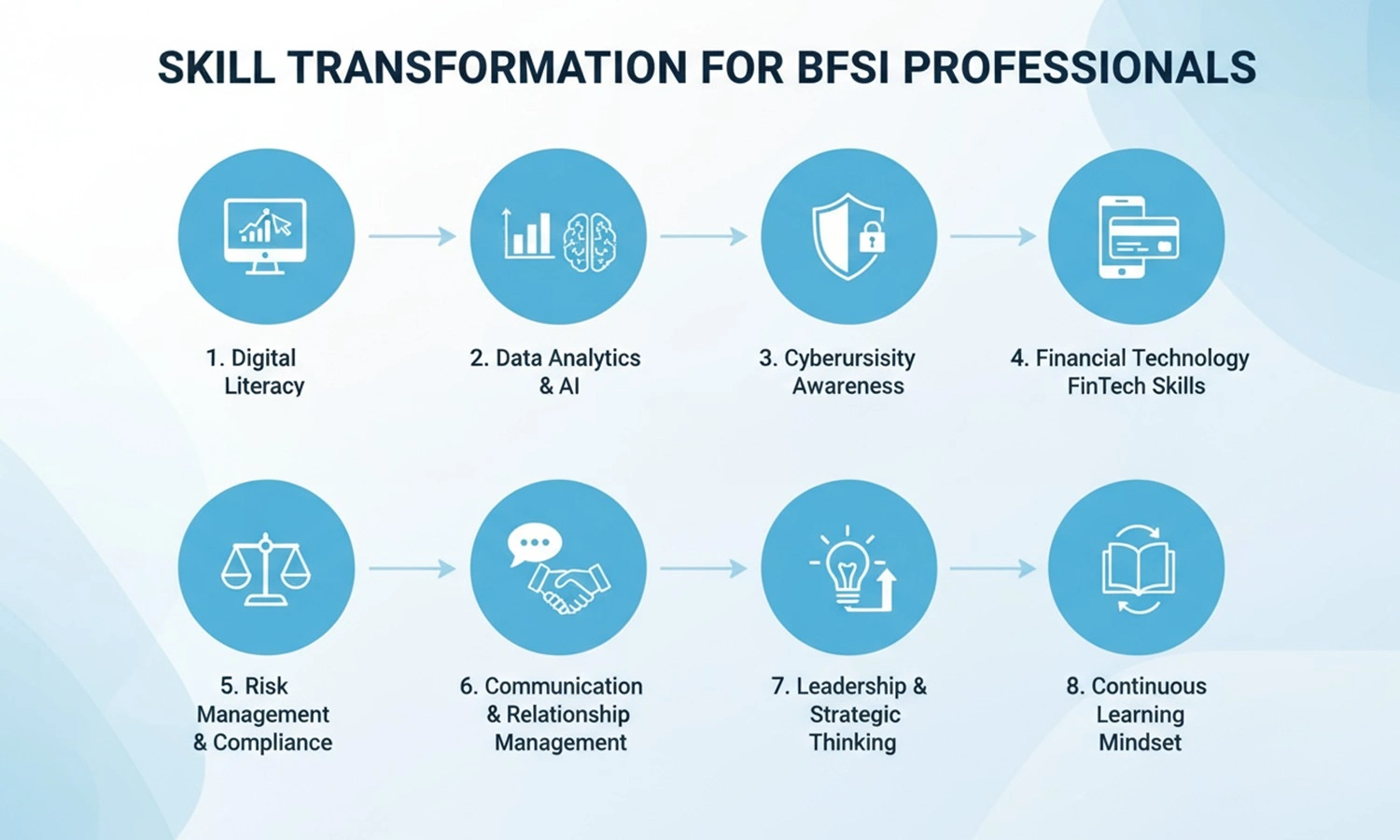
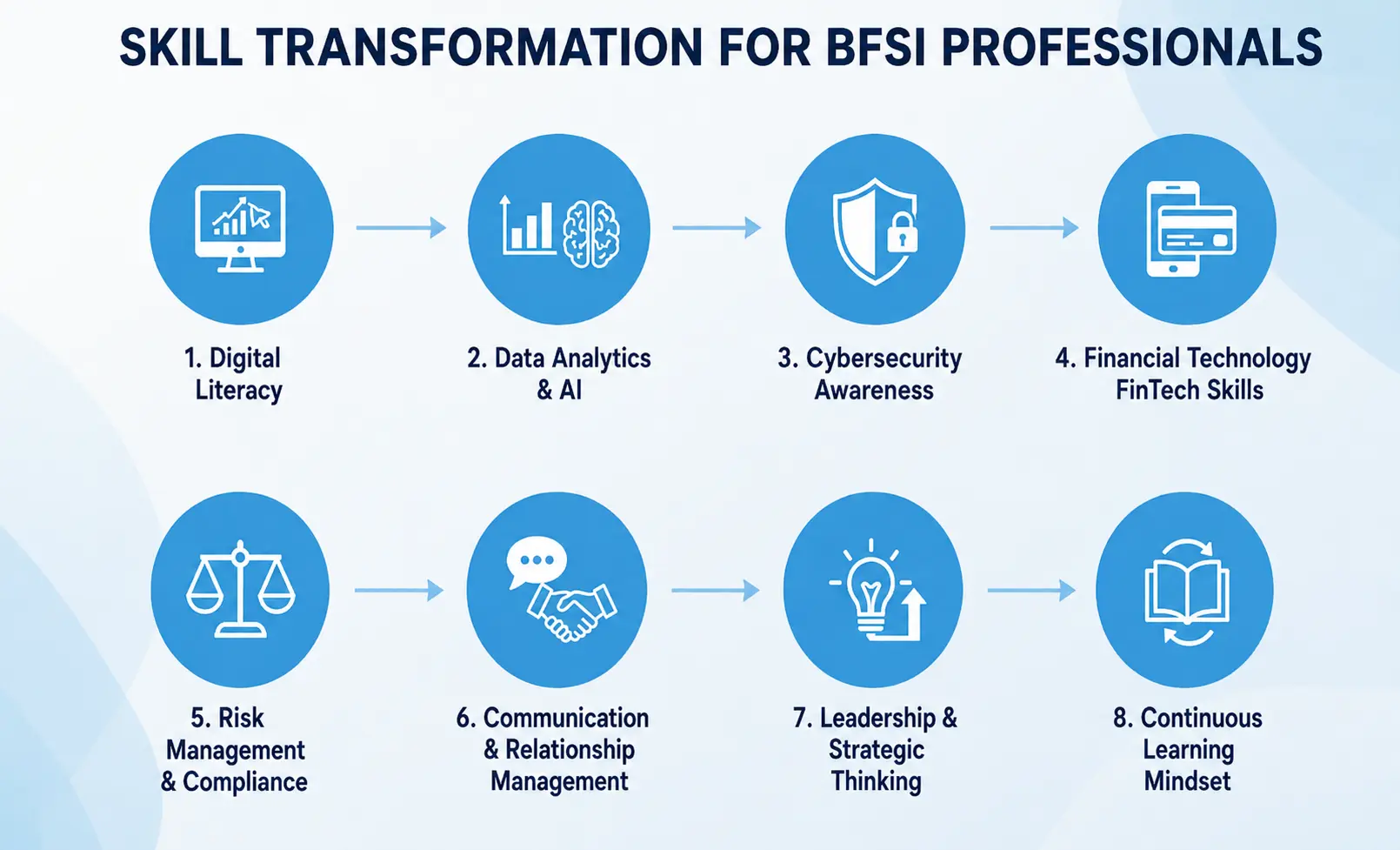
Skill Transformation for BFSI Professionals
- Digital literacy and fintech awareness are crucial.
- Understanding technical identifiers like a UPI ID or a UPI number helps professionals guide customers when troubleshooting transactions.
- Banking staff must also know how to use UPI in banking operations to handle modern back-end systems and digital customer queries.
- Knowledge of fraud detection, compliance, and risk management is in high demand.
- Soft skills like customer relationship management remain vital in a digital setup.
- Continuous learning through structured training ensures employability in evolving BFSI jobs.
Future Outlook of BFSI Careers with UPI
The impact of UPI will continue to expand, bringing innovation and job creation across the sector.
- BFSI jobs will focus more on analytics, technology, and customer-centric services.
- Graduates entering the sector can expect faster growth in digital payments in India.
- The blend of finance and technology ensures a dynamic career path, with UPI acting as the key driver of change.
The rise of UPI in India has changed the very fabric of banking and finance. From reducing dependence on manual operations to creating new-age career opportunities, it has accelerated BFSI digital transformation. For graduates, this is the right time to embrace these changes, reskill, and step into high-growth BFSI jobs.
With SRM School of Banking’s structured training, future professionals can confidently lead in a digital-first world.
FAQs
UPI will create more digital and tech-enabled roles, ensuring long-term career opportunities.
It has reduced manual roles while increasing demand for digital specialists.
Roles such as fraud detection analysts, fintech consultants, and cybersecurity experts.
Yes, UPI-related roles often come with competitive salaries due to specialized skills.
UPI is an instant real-time payment system that allows users to transfer money between bank accounts instantly using a smartphone.

