

Overview
The Meaning of the Role in Simple Terms
A Working Day at the Personal Banking Desk
Morning Portfolio Review
Customer Conversations
Compliance Work
What Banks Measure Every Month
Banks track performance with clear numbers. The core personal banker roles and responsibilities usually fall into four groups.
- Portfolio growth through higher CASA balances, which means current and savings account deposits
- Cross-sell of loans, cards, insurance and mutual funds to existing customers
- Retention so that balances do not move to another bank
- Service quality measured through complaint resolution time and feedback scores
Skills That Get Freshers Hired
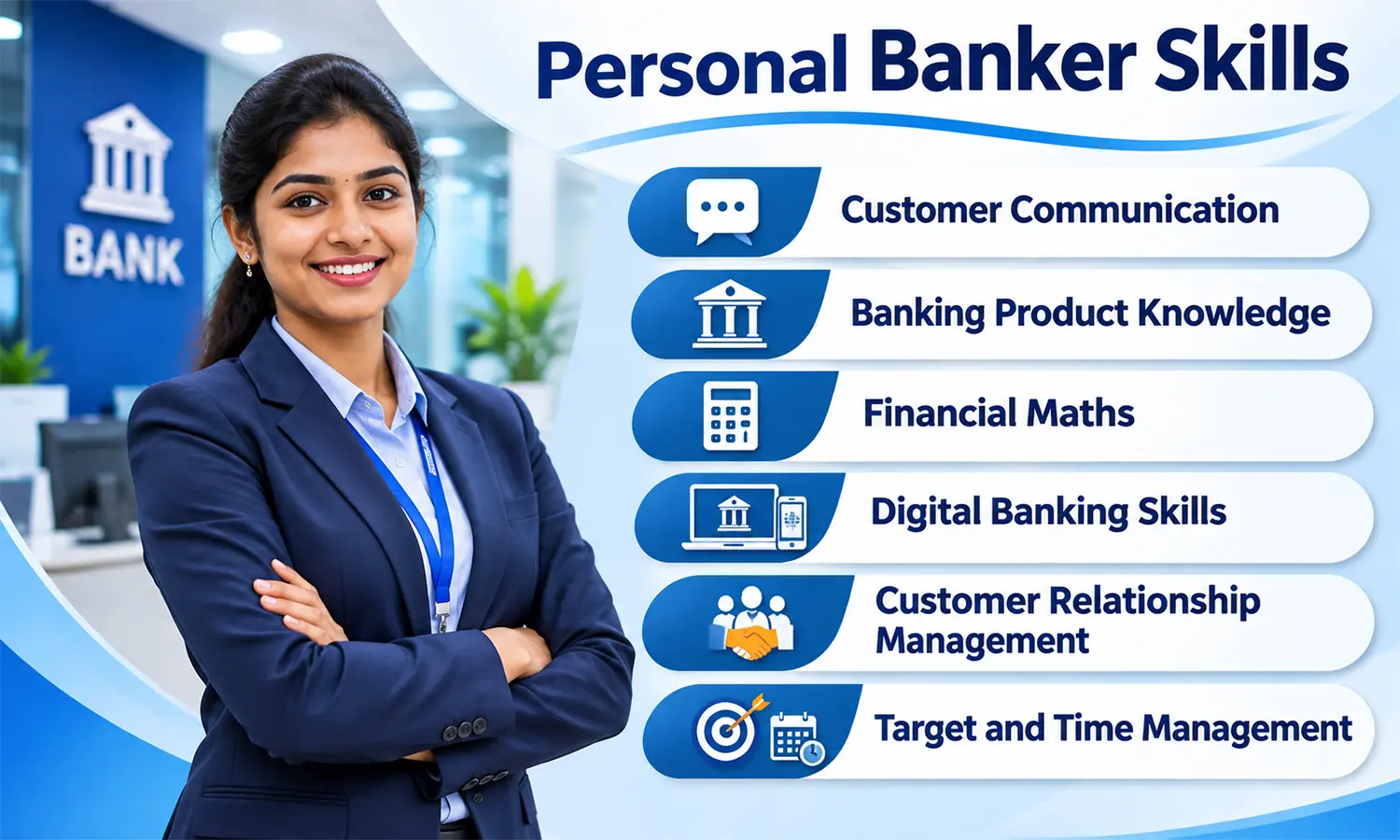
Recruiters rarely expect a fresher to know every product. They look for a few personal banker skills that are hard to teach in a short induction.
- Comfortable communication in English and the local language, since many customers prefer to discuss loans in Tamil, Marathi or Hindi
- Basic financial maths to explain EMIs, interest rates and maturity values with confidence
- Digital fluency, because India recorded 24.51 billion UPI transactions in August 2026 as per NPCI data and customers expect help with apps and UPI limits
- Patience with monthly targets and the habit of treating a slow week as feedback
Is Personal Banker a Good Job for Freshers in 2026?
How to Get Job Ready Before You Apply
Key Takeaways
- A personal banker manages a fixed group of retail customers and grows their relationship with the bank
- CASA growth, cross-sell, retention and service scores drive most reviews
- Communication, basic maths and digital fluency matter more than prior experience
- Entry packages around ₹3.5 lakh a year plus incentives are common in private banks and NBFCs
- Structured training before hiring shortens the learning curve strengthen a fresher resume.
Start Your Personal Banker Journey With Confidence
FAQs
A graduate degree in any discipline is enough for most banks. Commerce or management backgrounds help but are not mandatory. Recruiters care more about communication and customer focus. A short banking program covers the product knowledge you need before the first interview.
Entry packages at private banks and NBFCs commonly sit around ₹3 lakh to ₹4.5 lakh a year. Incentives linked to targets add to that. Fixed pay rises with portfolio size and promotions. Moving into relationship management usually brings a step up in salary and responsibility.
The two roles overlap a lot. The personal banking desk typically handles more retail customers with everyday needs. A relationship manager handles fewer customers with higher balances or complex products. Many banks treat the first role as a stepping stone to the second.
Yes. Banks hire freshers every year because internal systems can be taught on the job. Candidates who already know KYC norms and product basics stand out. A placement-linked program helps a fresher reach the interview with that preparation done.
Yes, most private banks set monthly targets for deposits, loans and third-party products. Reviews happen with the branch manager every week or month. Planned calls and steady follow-ups make them achievable. Training in need-based selling makes the routine far less stressful.

