

Overview
Key Takeaways
- A collection agent works phone, field, or digital channels to recover overdue payments on behalf of a lender.
- Debt collection agent roles differ slightly from bank-employed positions because agents often work through a third-party recovery firm.
- Strong collection agent skills include negotiation, active listening, record keeping, and staying calm under pressure.
- A field collection agent needs local area knowledge and comfort with in-person visits, while tele-based agents rely more on scripting and CRM discipline.
- Consistent, ethical recovery practice is what separates a good collection agent from one who burns through leads without results.
What Is a Collection Agent
Field Agent Versus Desk-Based Agent
Desk-based agents work through dialer systems and CRM queues, handling a higher volume of accounts each day but with less direct customer contact. Many recovery firms rotate staff between both formats depending on portfolio needs.
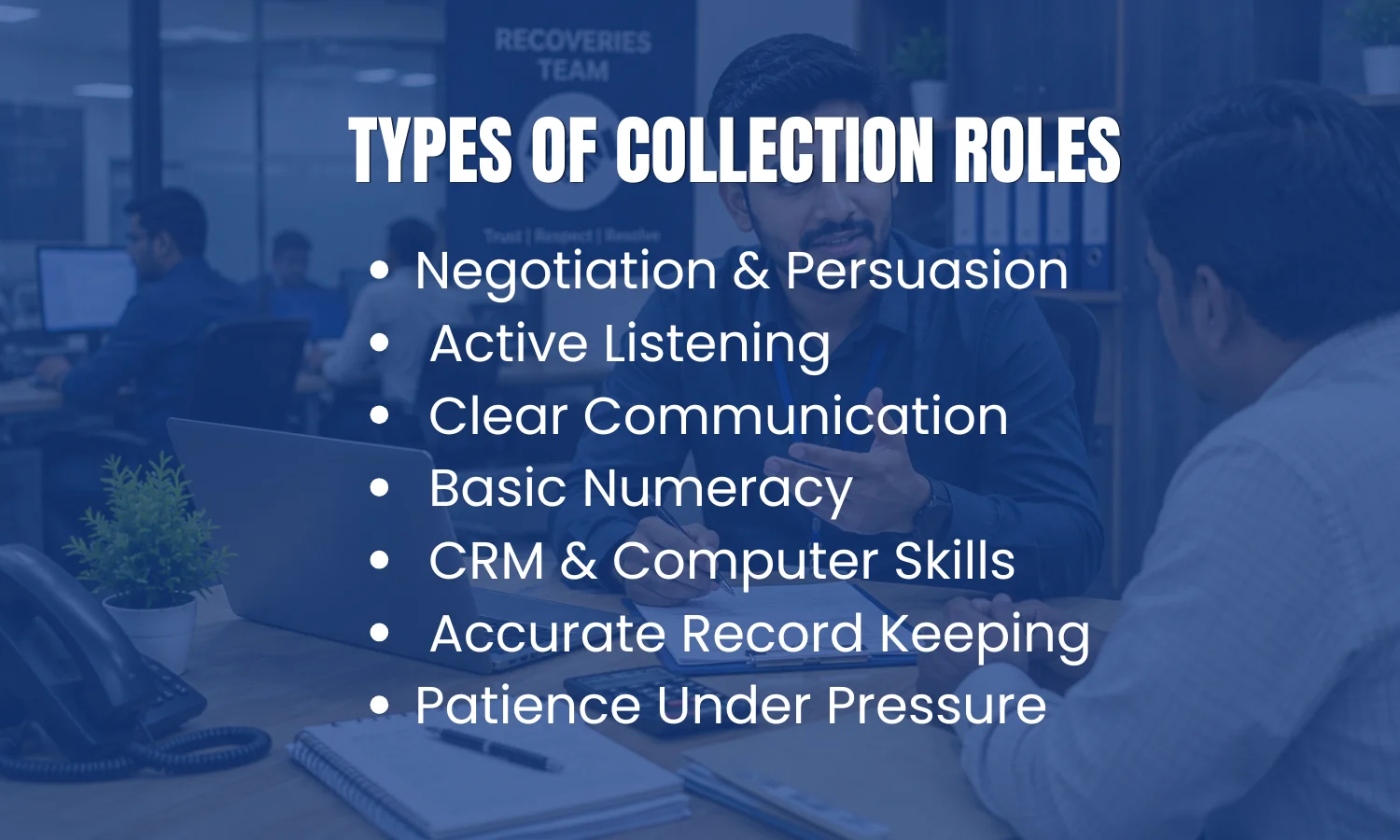
Skills That Actually Matter in This Job
What Makes Someone Good at This Work
Starting or Growing a Career in This Field
SRM SB runs placement-linked training built around real hiring needs at private banks and NBFCs, so the skills you learn map directly to what recruiters test for. Its bank orientation training covers call handling, recovery regulation basics, and CRM workflows before candidates ever sit in front of a recruiter, which is exactly the preparation a first collection agent role rewards.
FAQs
A collection agent typically works a daily queue of overdue accounts, making calls or visits, recording outcomes and following up on payment promises. Managers review these queues each morning and reassign accounts based on how overdue they are.
Yes, most entry-level collection agent roles hire freshers and train them on call scripts, systems, and recovery regulations during the first few weeks on the job. A confident phone manner and basic computer literacy matter more than prior experience.
Not always. Many collection agent roles are entirely desk-based, especially in larger recovery centres that rely on dialer systems. Field visits are usually reserved for higher-value accounts or cases where phone contact has repeatedly failed.
Performance is usually tracked through recovery percentage against a monthly target, the number of promises to pay kept, and call or visit quality scores reviewed periodically by team leads.

