

Overview
Banking jobs with no experience are available in customer service, clerical, sales, and operations roles. Most ask for a graduation degree in any discipline, good communication, and basic numeracy. Public sector exams, private bank hiring, and training programs are the three main ways for beginners to get started right away.
Are Banking Jobs With No Experience Really Available?
Yes, and they are more common than most graduates think. Bank jobs without experience exist because banks train new hires on products, systems, and compliance in the first weeks. They look for attitude and communication before years of work history.
Public sector banks recruit freshers every year through IBPS and SBI exams, and private banks hire graduates directly for customer facing posts. Banking jobs with no experience are therefore open to anyone willing to prepare.
Attitude counts for more than people expect. Interviewers often ask simple questions about why you want to work in a bank, how you handle a rude customer, and what you know about the bank’s products. Honest, clear answers impress them.
Many freshers worry that a blank work history will count against them. In banking, it rarely does. Training inside banks is built for people who are new to the work, and recruiters know it.
Entry-Level Banking Jobs and What They Involve
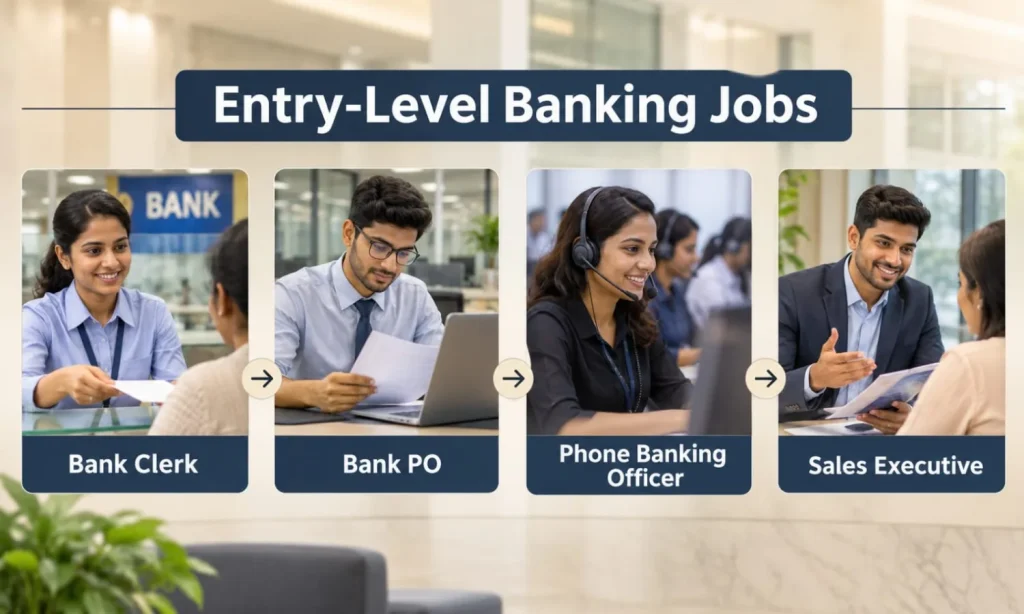
Entry-level banking jobs include clerk or junior associate, customer service executive, phone banking officer, relationship executive, and sales executive. Operations roles handle account opening, KYC checks, and transaction processing.
Probationary officers in public sector banks join at officer grade after clearing the PO exam. IBPS Clerk exams usually set an age band of 20 to 28 years, so check each notification for the latest limits.
Do not ignore smaller employers and regional banks. They often recruit locally, offer hands-on exposure, and give freshers real responsibility early. A strong first posting in such a place can lead to bigger roles within a few years.
Which Jobs in Banking Sector for Freshers Fit You Best?
Jobs in banking sector for freshers come through three routes. The exam route leads to public sector and regional rural banks. The direct route leads to private banks and NBFCs. The training route uses institutes that prepare graduates and connect them with hiring partners.
Banking jobs for freshers reward people who can speak clearly, handle numbers calmly, and learn products quickly. A strong resume, mock interviews, and some practice with customer conversations make a real difference.
Resume quality makes a visible difference. Keep it to one page, list internships and projects, mention languages you speak, and avoid exaggeration. Recruiters read hundreds of resumes and notice small errors quickly.
Locality matters when you plan. Smaller towns often have fewer applicants per vacancy, and a posting there can give quick exposure to lending, deposits, and customer care.
Bank Jobs for Beginners and Fresh Graduates: How to Prepare
Bank jobs for beginners become easier to win with preparation. Learn core banking terms, understand deposits and loans, follow banking news, and practise a short, honest introduction. Employers value clear thinking and good manners.
Banking jobs for fresh graduates also reward a clean academic record and a willingness to work with targets. Short certifications in retail banking, KYC, and customer service add proof of effort when you lack work history.
Plan for the long game. Your first role will teach you systems, customers and rules, and the second will build on that. Banks reward people who stay curious, take training seriously, and meet deadlines.
Internships, college projects, and part-time customer work also count as proof of effort. Mention them with simple facts about what you did and what you learned.
Turn Your Degree Into a Banking Role
If you want a structured path into banking jobs with no experience, SRM SB (School of Banking) offers a Placement Assured Program for graduates from any discipline. You learn banking products, sales skills and compliance through classroom, online and on-the-job training, followed by interview preparation and placement support with private sector banking partners. Visit srmsb.com and apply today to start your career.
Key Takeaways
- Banking jobs with no experience exist in service, clerical, sales, and operations roles.
- Any graduation degree is usually enough to apply for entry posts.
- Exams, direct hiring, and training programs are the three main routes.
- Banks train new hires, so attitude and communication count most.
- Mock interviews and short certifications strengthen a fresher resume.
FAQs
Yes. These posts are open to graduates through exams, direct hiring, and training programs. Banks train new staff on products and systems, so communication and willingness to learn matter more than work history.
Any graduation degree is accepted for most entry posts. Commerce and finance help, but arts, science, and engineering graduates also get hired. Such posts usually test aptitude and communication rather than a particular subject.
Pay depends on the bank, grade, city, and incentives. Public sector notifications list pay scales, and private employers state a cost to company figure in offers. Always read the latest notice before you compare offers.
Yes. Private banks and NBFCs hire graduates for sales, relationship, and customer service roles. Selection usually involves a test or interview that checks communication, product sense, and attitude toward targets.
Direct hiring and job-focused training programs usually move faster than exam cycles. They suit graduates who want to start earning soon. The exam route takes longer but leads to public sector careers.

