
What is Cross Selling

What is Cross Selling in Banking and Why It Matters

Overview

Cross selling in banking means offering an existing customer another product that suits their needs, such as an insurance plan for a savings account holder or a credit card for a salaried borrower. Done well, it deepens the relationship and raises the total revenue a bank earns from each customer.

What Is Cross Selling in Banking?

A customer opens a savings account, and a few months later the bank suggests a fixed deposit, a card upgrade, or a term plan. That is the cross selling meaning in plain terms: selling a related product to someone who already trusts you. Branch staff, relationship managers, and phone banking officers do this daily.
People often mix up the two ideas, so here is the split. Upselling and cross selling both grow account value, but upselling moves a customer to a better version of the same product, such as a premium credit card. Cross selling adds a different product altogether.
Customers can tell the difference between help and pressure within a minute. An offer that follows a real-life event, like a new job, a marriage, or a home purchase, feels useful. An offer that follows a monthly target feels like a sales call, and people stop trusting the branch.

Cross Selling Products in Banking That Customers Actually Use

The most common cross selling products in banking are life and health insurance, mutual fund SIPs, credit cards, personal loans, and demat accounts. Banks sell insurance through bancassurance tie-ups with insurers, which has become a steady source of fee income for many branches.
Some cross selling in banking examples are simple. A home loan borrower gets offered home insurance. A salary account holder receives a pre-approved personal loan. A new business account gets a current account with a payment gateway. In each case, the offer follows a real need.
Targets are still part of the job, and good bankers learn to hit them without losing goodwill. They ask two or three simple questions, listen to the answers, and suggest one product, not five. That habit also reduces complaints.
How Common Is Cross Selling in the Banking Industry

How Common Is Cross Selling in the Banking Industry?

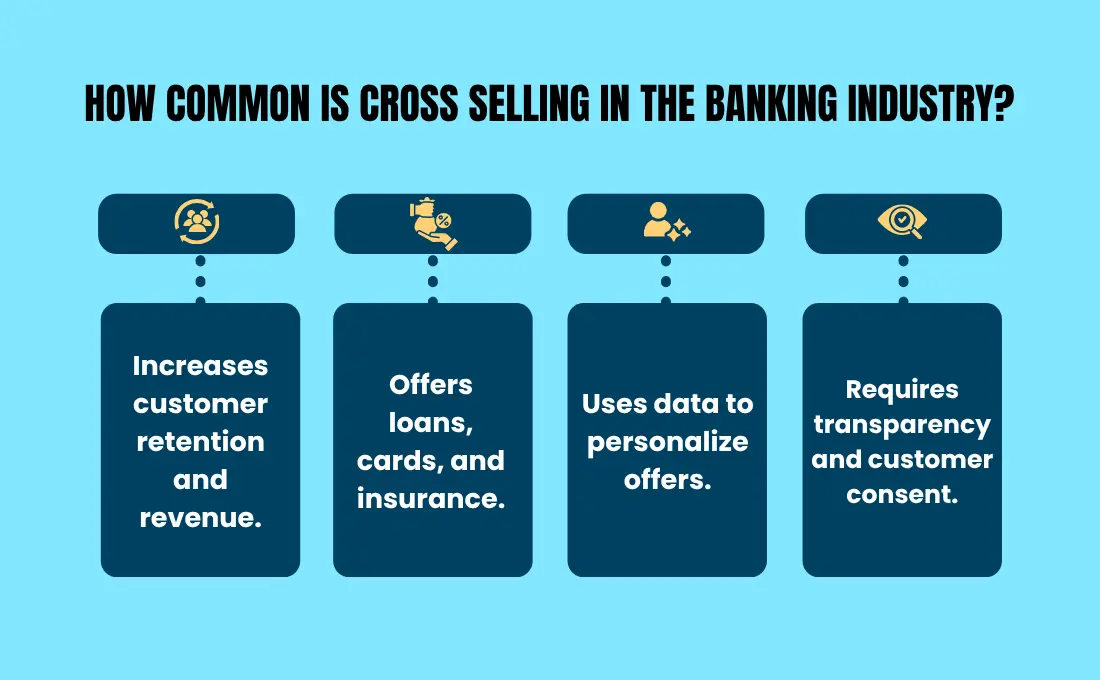
Banks generally believe that customers who hold several products leave less often, which is why cross selling in banking industry targets show up in most sales roles. Winning a new customer costs more than serving an existing one, so cross selling in banking stays a growth priority.
The risk is mis-selling. In 2016, a large US bank paid about 185 million dollars in penalties after staff opened accounts that customers never asked for. Indian regulators also expect fair selling and clear consent, so the lesson applies here too.
Technology has changed the way offers reach people. Banks now use transaction history to suggest products at the right moment, such as a travel card before a holiday or a top-up loan after a repayment milestone. Staff who understand these signals can have far better conversations.

Skills and Courses That Prepare You for Sales Roles

Product knowledge, active listening, and basic needs analysis matter more than a smooth pitch. A banking course that covers retail products, customer handling, and compliance helps you sell responsibly. A BFSI course adds exposure to insurance, lending, and wealth products, which are the usual targets of cross selling.

Freshers who learn to read a customer’s profile before making an offer move faster into relationship roles. Role play and live call practice are the best way to build that habit.

Documentation matters as much as the pitch. A written record of what was explained, which charges apply, and what the customer agreed to protects both sides. Freshers who build this habit early are trusted with bigger portfolios later.

Ready to Build a Sales Career in Banking?

Cross selling in banking rewards people who know their products and treat customers fairly. SRM SB (School of Banking) trains graduates for roles such as relationship manager, business development officer, and customer service representative through its Placement Assured Program. You learn product basics, banking sales, and compliance through classroom and online modules, then practice on the job. Take the first step at SRM SB toward a role you can grow in.

Key Takeaways

  • Cross selling in banking works when the offer matches a real customer need.
  • Upselling improves the same product, while cross selling adds a new one.
  • Insurance, cards, loans, and investments are the usual products on a sales target.
  • Mis-selling brings penalties and damages trust, so consent and clarity come first.
  • Product knowledge and listening skills decide how far you go in sales roles.

FAQs

They do it because serving an existing customer costs less than finding a new one. A customer with a salary account, a card, and an insurance plan also tends to stay longer. The strategy only works when the customer actually needs each product.
No. It becomes mis-selling when staff push products the customer does not need or fail to explain the terms. Fair selling means asking questions first, explaining charges clearly, and recording consent. Regulators in India watch this closely.
Relationship managers, branch sales staff, phone banking officers, and business development officers all handle targets of this kind. Even customer service roles meet it, since a service call often reveals a need for a new product.
Yes, with practice. Freshers can learn it by studying product features, shadowing experienced colleagues, and rehearsing customer conversations. Most banks also train new hires on products and compliance during the first few weeks on the job.
Good listening, clear communication, and sound product knowledge matter most. A learner who can spot a need and explain a product plainly will do well at it. Basic numeracy and patience with objections also help.
Select the fields to be shown. Others will be hidden. Drag and drop to rearrange the order.
  • Image
  • SKU
  • Rating
  • Price
  • Stock
  • Availability
  • Add to cart
  • Description
  • Content
  • Weight
  • Dimensions
  • Additional information
Click outside to hide the comparison bar
Compare