
Overview
Key Takeaways
- What is modern banking? It comes down to digital-first operations layered on top of core banking functions.
- The difference between traditional banking and modern banking lies mainly in speed, channel, and automation levels.
- The role of technology in modern banking now touches everything from onboarding to fraud detection.
- Modern banking in India has grown quickly through mobile adoption and digital payment systems.
- Knowing the advantages of modern banking helps candidates explain their sector interest clearly in interviews.
What Is Modern Banking
Difference Between Traditional Banking and Modern Banking
| Aspect | Traditional Banking | Modern Banking |
|---|---|---|
|
Transaction speed
|
Often required branch visits
|
Instant, app-based transfers
|
|
Customer onboarding
|
Paper forms, physical verification
|
Digital KYC, video verification
|
|
Fraud detection
|
Manual review processes
|
Automated, pattern-based detection
|
|
Customer service
|
Branch staff and phone banking
|
Chatbots, apps, branch support combined
|
Understanding this difference between traditional banking and modern banking helps candidates recognise that today’s banking roles require comfort with both customer service and basic digital tools, not one or the other.
The Role of Technology in Modern Banking
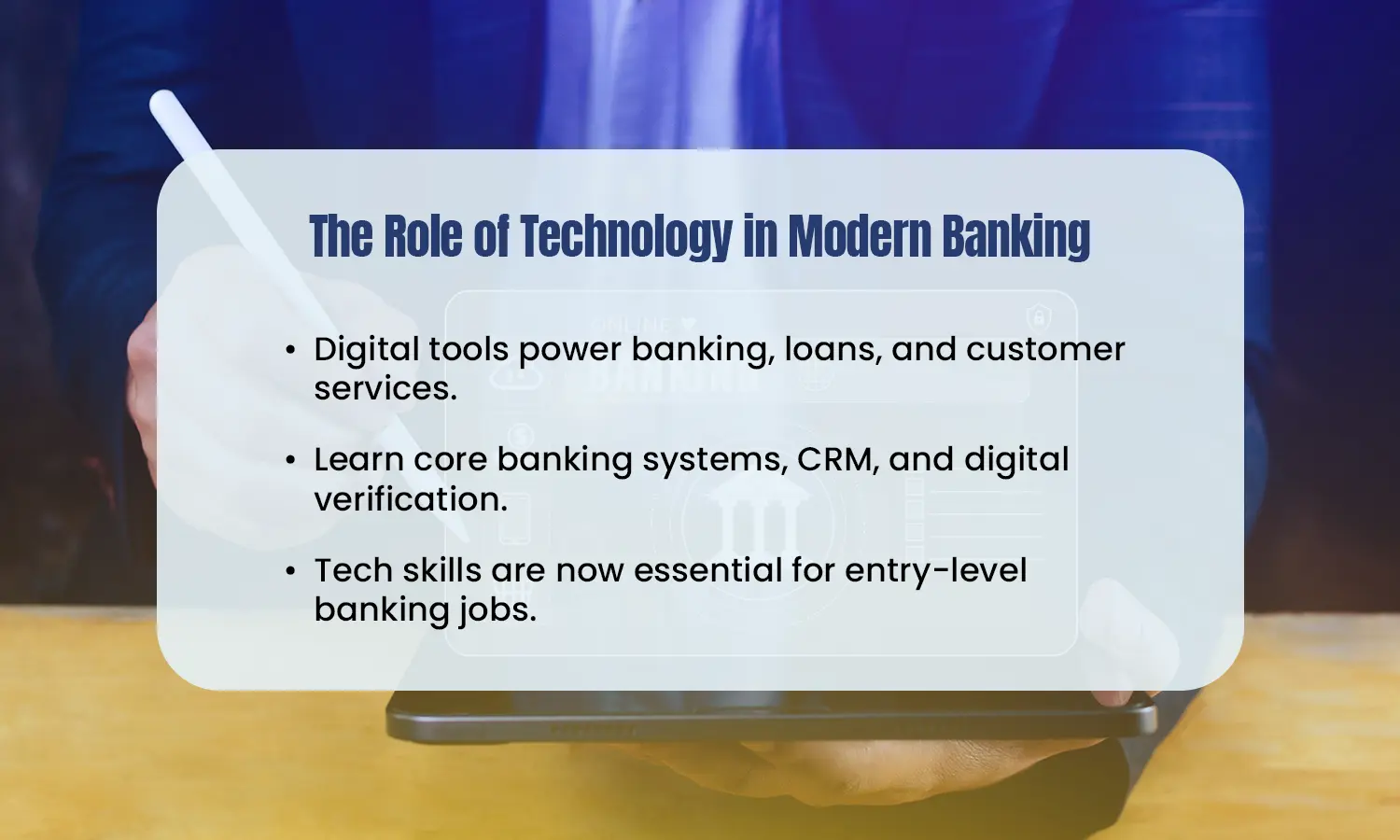
For frontline staff, this means product knowledge alone is no longer enough. Understanding how digital tools support daily tasks, from processing a loan application to verifying a customer’s identity, has become part of the basic skill set expected in most entry-level roles.
Modern Banking in India: Growth and Adoption
Advantages of Modern Banking for Customers and Staff
- Faster transaction processing improves customer satisfaction and reduces branch queue times
- Digital KYC and onboarding reduce paperwork and speed up account opening processes
- Automated fraud detection catches suspicious activity faster than manual review alone
- Staff can focus more on advisory conversations rather than repetitive manual tasks
- Data-driven insights help banks personalise product recommendations for individual customers
Modern Banking Platform Capabilities Job Seekers Should Understand
How SRM SB Prepares Candidates for Modern Banking Roles
SRM SB’s bank orientation training includes exposure to core banking software and digital tools alongside traditional sales and compliance training, ensuring candidates are ready for the realities of modern banking rather than only traditional branch operations. The program remains placement-linked, connecting candidates directly with interview opportunities at partner banks.
Prepare for a Career Built Around Modern Banking
Understanding modern banking and how it differs from traditional operations helps you walk into interviews with a clearer, more current perspective. SRM SB’s placement-linked bank orientation training prepares candidates for both digital tools and traditional banking skills together. Reach out to check the next batch and get ready for a modern banking career.
FAQs
Modern banking refers to digitally enabled banking services built around mobile apps, instant transfers, and automation, differing from traditional banking’s reliance on branch visits and paper processes.
The role of technology in modern banking spans fraud detection, digital onboarding, credit scoring, and customer service tools, all working together to speed up and personalise banking operations.
Modern banking in India grew through widespread smartphone adoption and government-backed digital payment initiatives that pushed customers across cities and villages toward digital banking channels.
The advantages of modern banking for job seekers include a shift toward more advisory, customer-focused roles as routine transactions move to digital channels, changing the nature of entry-level positions.

