

Overview
BFSI stands for Banking, Financial Services, and Insurance, three interconnected industries grouped together due to shared regulatory and operational requirements. Understanding what BFSI stands for helps job aspirants recognize the full range of career opportunities available beyond traditional bank roles alone.
Key Takeaways
- The full form of BFSI always refers to Banking, Financial Services, and Insurance combined.
- BFSI means far more than just banks. It covers insurers, NBFCs, and financial service firms too.
- What does BFSI stand for? In interviews, it is a common opening question candidates should answer confidently.
- BFSI in banking contexts usually refers to the retail and branch-facing side of the broader sector.
- Knowing what BFSI stands for clearly helps you explain your career interest more precisely to recruiters.
What Is BFSI and What Does It Stand For
Breaking Down What BFSI Means
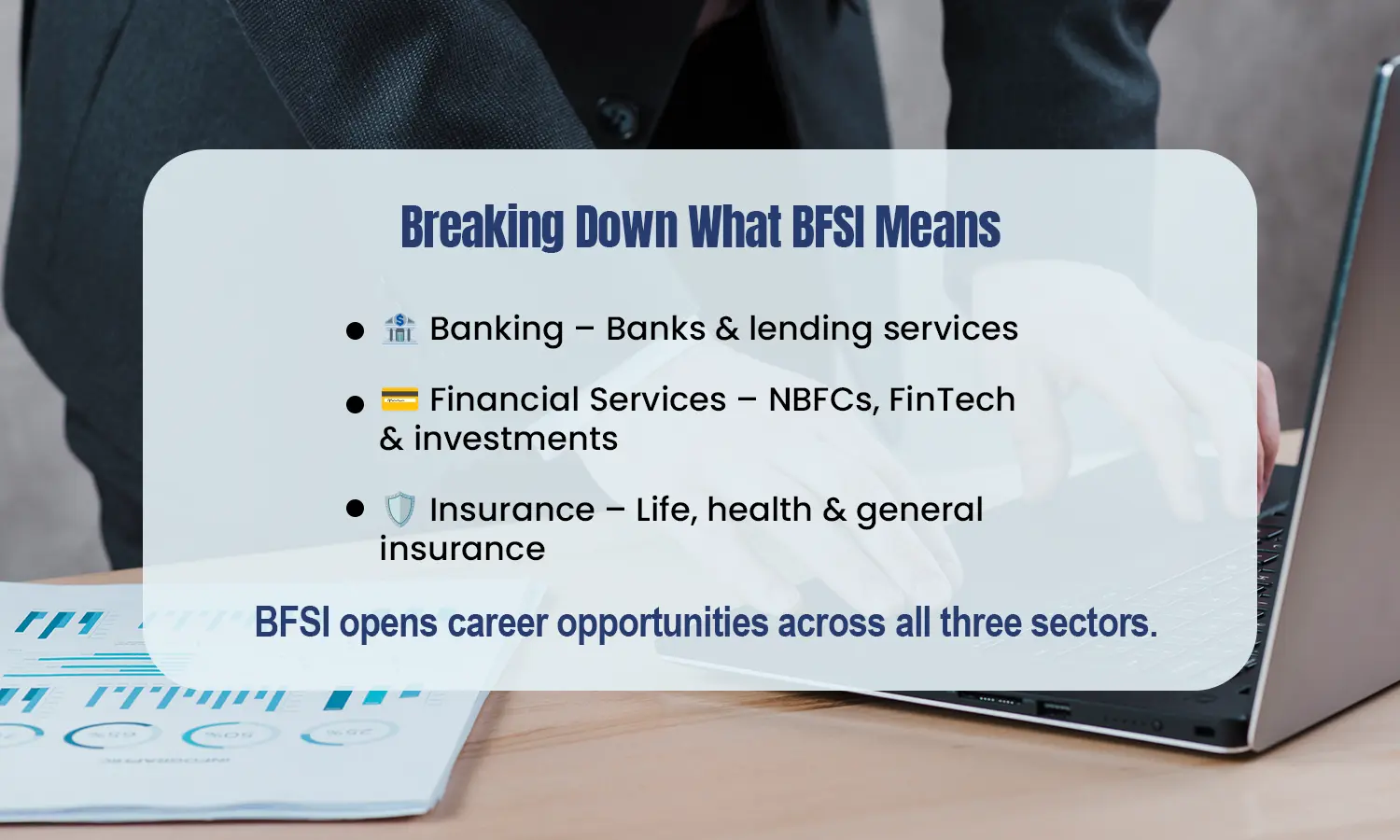
- Banking covers retail banks, cooperative banks, and public and private sector banking institutions
- Financial services includes NBFCs, mutual funds, stock broking firms, and payment companies
- Insurance covers life insurance, general insurance, and health insurance providers
Full Form of BFSI in Everyday Use
BFSI in Banking: A Closer Look
Candidates targeting BFSI in banking roles specifically should focus their preparation on customer communication, product knowledge, and basic compliance understanding, since these are the core skills tested during hiring for branch-level positions.
Why BFSI Stands For More Than Just Banks
How SRM SB Builds Clarity Around BFSI From Day One
The program remains placement-linked, giving candidates direct interview access with partner banks, and SRM SB also supports banks directly with training solutions for their existing teams, reflecting deep familiarity with how the full BFSI structure operates in practice.

