

A banking professional can know every product in detail and still struggle if they cannot explain it clearly. That is why the importance of communication skills sits at the centre of every successful career in finance. Customers do not see the systems behind a bank. They judge it by the person in front of them and how well that person listens and explains. This article shows why communication matters so much in banking and how it shapes trust, sales, and daily teamwork.
What Communication Skills Really Mean
Why Communication Skills Drive Trust
Communication and Daily Banking Work
Strong communication is not only for customer meetings. It runs through every part of a banker’s day. Good communication skills help staff coordinate, avoid errors, and solve problems quickly. Consider how these abilities appear in routine work:
- Explaining account features so a customer chooses the right one
- Listening carefully to understand a complaint before responding
- Writing clear emails and notes that leave no room for confusion
- Sharing updates with teammates so nothing falls through the cracks
Each of these tasks depends on clarity. A small misunderstanding in banking can lead to a wrong transaction or an unhappy customer, so precise communication carries real weight.
Communication as a Career Advantage
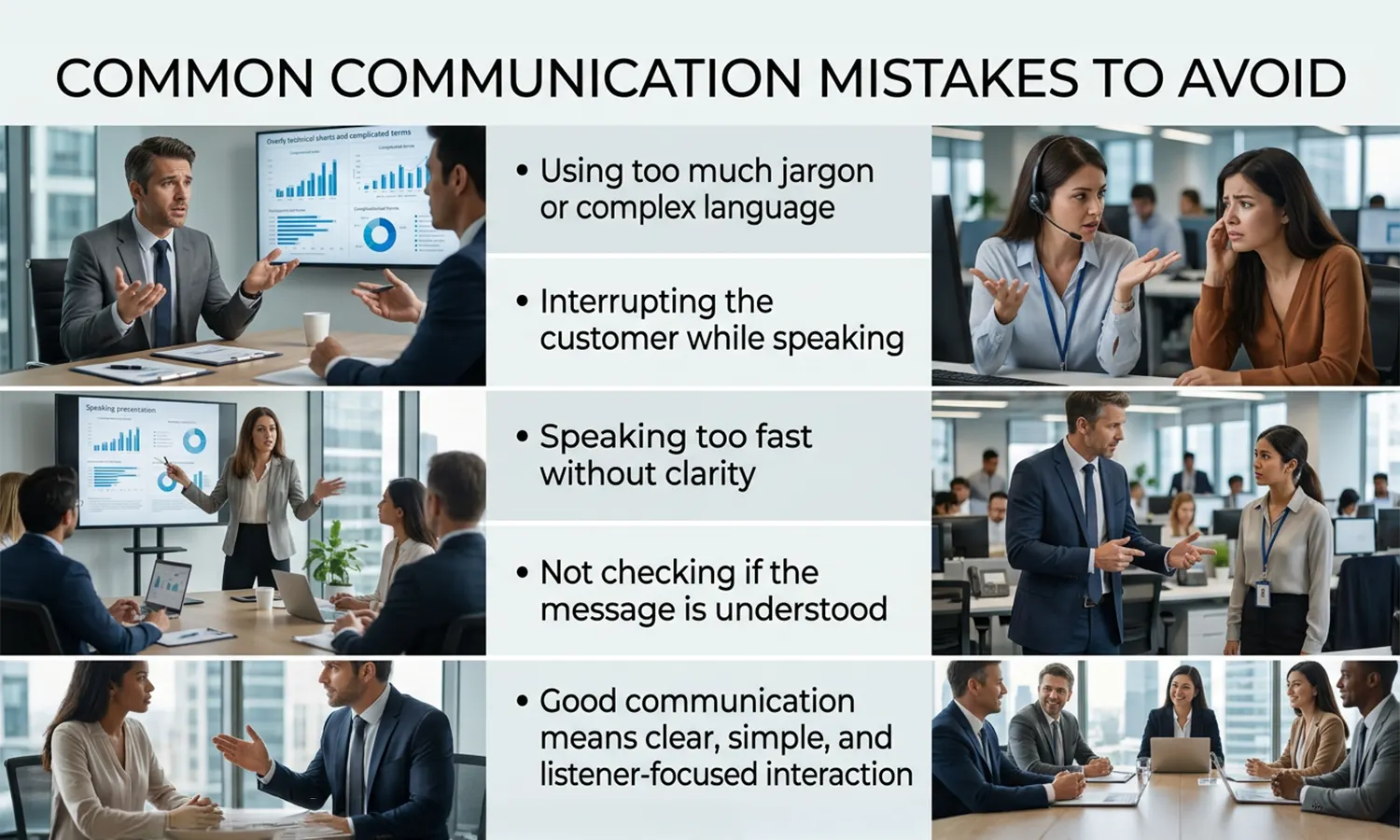
Common Communication Mistakes to Avoid
Building Stronger Communication Over Time
Communication in Customer Conversations
How Clear Communication Helps Teams
Banks run on teamwork, and teamwork depends on clear messages. When colleagues share updates plainly, work flows smoothly and fewer mistakes slip through. Good communication skills keep everyone aligned, even during a busy day.
Poor communication, by contrast, causes delays and frustration. A single unclear instruction can lead to a wrong entry or a missed deadline. This is why strong teams treat clear communication as a shared responsibility rather than a personal nicety.
Communication and Customer Trust
Communication as a Daily Discipline
The strongest communicators treat the skill as a daily discipline rather than a fixed talent. They prepare for important conversations, choose words with care, and review how an exchange went afterward. This steady attention is what separates a good communicator from an average one.

