
Introduction
Walk into any bank conversation and you will hear a wall of short forms and special words. For a newcomer, this language can feel like a barrier. Yet most banking terms are simpler than they sound once someone explains them clearly. Knowing these words helps you handle your own money with confidence and prepares you for any role in the financial sector. This guide explains the common banking concepts that every customer and aspiring professional should understand, using examples instead of jargon.
Why Learning Banking Terms Matters
Clear knowledge of banking terms protects you from mistakes. When you understand what a document or service actually means, you make better choices and ask sharper questions. For job seekers, this knowledge is just as valuable, because interviewers often test whether a candidate knows the basics before anything else.
A strong grip on banking terms and concepts also builds trust with customers. A professional who can explain a product in simple words earns more respect than one who hides behind technical language.
Account and Deposit Terms
The first set of words you will meet relates to where money is kept. A fixed deposit is a common starting point. When people ask what is FD in bank, the answer is a deposit where money is locked for a set period in return for a higher rate of interest. A recurring deposit is similar but works in instalments.
When someone asks what is RD in bank, the answer is an account where you deposit a fixed amount every month for a chosen term, which helps build a habit of saving. Another everyday term is the bank statement. If you wonder what is bank statement, it is simply a record of all the money that has moved in and out of your account over a period.
Compliance and Identity Terms
Banks must confirm who their customers are before offering services. This is where the term KYC appears. When a customer asks what is KYC in bank, the answer is Know Your Customer, the process of verifying identity and address using official documents.
KYC protects both the bank and the customer from fraud and misuse. Every account holder goes through it, and staff who handle these checks need to know the rules well. This single process is one of the most common banking terms for interview rounds, so candidates should be ready to explain it.
Payment and Credit Terms
Some terms describe how money is moved or promised. A demand draft is one of them. When people ask what is DD in bank, the answer is a prepaid instrument issued by a bank that guarantees payment to a named person, which makes it safer than a personal cheque.
Another important term is the bank guarantee. If you ask what is bank guarantee, it is a promise from a bank to cover a loss if its customer fails to meet an obligation. Businesses use it often during contracts and tenders. Here is a quick summary of these terms:
- Fixed deposit: money locked for a set time at a higher interest rate
- Recurring deposit: a fixed monthly saving for a chosen term
- Demand draft: a prepaid and guaranteed payment instrument
- Bank guarantee: a bank's promise to cover a customer's obligation
Banking Terms for Interview Preparation
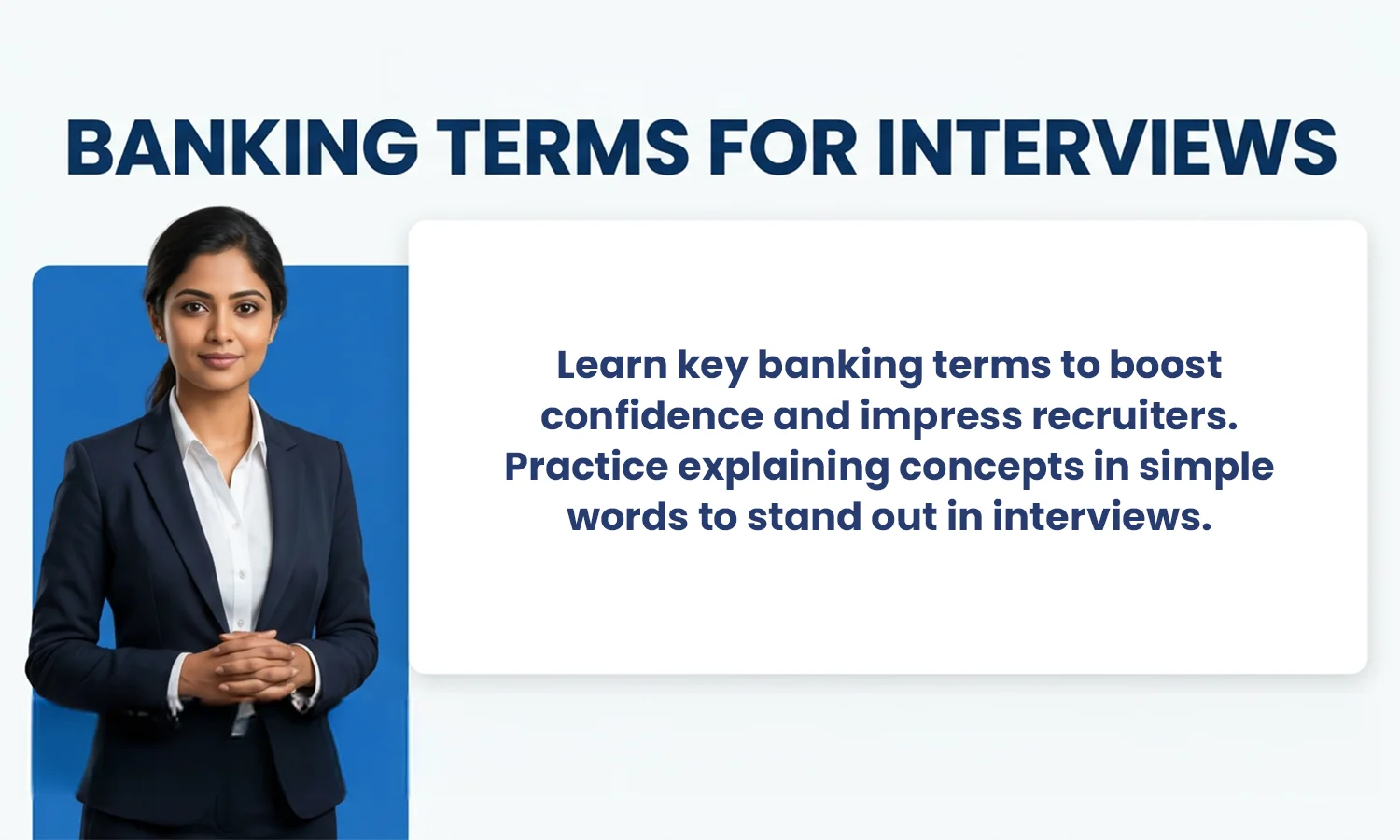
Candidates who study banking terms before an interview stand out quickly. Recruiters want to see that you understand the work, not just that you want the job. Reviewing the most common banking terms and concepts gives you a clear advantage and calms your nerves on the day.
Focus on the terms in this guide first, then add more as you learn. Practice explaining each one in a single sentence, as if you were speaking to a customer who has never used a bank before. That skill of simple explanation is exactly what employers look for.
Building Confidence Through Knowledge
Banking is a field where small details carry real weight. A single misunderstood term can lead to a wrong decision for a customer. By learning these banking terms early, you build a foundation that supports every later step, whether you are managing your own finances or guiding others.
Everyday Terms Worth Knowing
Beyond the major concepts, a handful of everyday banking terms appear in almost every conversation. Knowing them makes routine tasks far smoother and helps you read documents without confusion.
- Interest: the cost of borrowing or the reward for saving
- Overdraft: a facility that lets you spend more than your balance up to a limit
- EMI: the equal monthly instalment used to repay a loan
- NEFT and RTGS: common systems used to transfer money between banks
Each of these terms describes something a customer meets often. Once you can define them in plain words, banking paperwork stops feeling like a foreign language and starts to make clear sense.
How to Keep Building Your Vocabulary
Learning banking terms is not a one time task. New products and rules appear regularly, so the most capable professionals treat learning as an ongoing habit. Reading financial news for a few minutes each day is a simple way to stay current.
Keep a small personal glossary and add any new word you meet, along with a one line meaning in your own words. Over a few months this list becomes a powerful study tool, especially when you prepare banking terms and concepts for an interview or a new role.
A useful habit is to teach a term to someone else as soon as you learn it. Explaining a concept in your own words proves that you truly understand it, and it locks the knowledge into memory far better than silent reading ever could. Many strong professionals say this single habit shaped their early growth.
Treat this list as a starting point and keep adding to it. The more clearly you can define each idea, the more capable you become. To continue learning banking concepts and to grow your skills for a career in the BFSI sector, visit srmsb.com for more.
FAQs
When customers ask what is KYC in bank, it stands for Know Your Customer. It is the process of verifying a customer’s identity and address using official documents, and it protects both the bank and the customer from fraud.
If you wonder what is FD in bank, a fixed deposit is an account where money is locked for a set period in return for a higher rate of interest. It is a safe and popular way to grow savings.
When people ask what is RD in bank, a recurring deposit is an account where you deposit a fixed amount every month for a chosen term. It helps build a steady saving habit over time.
If you ask what is Bank Guarantee, it is a promise from a bank to cover a loss if its customer fails to meet an obligation. Businesses use it often during contracts and tenders.
Common banking terms for interview rounds include KYC, fixed deposit, demand draft, and bank guarantee. Studying these banking terms and concepts before an interview shows that you understand the work.

