Key Takeaways
- The private bank hiring process usually moves fast once your resume is shortlisted.
- Most of the private bank hiring process is about role fit, not high scores.
- Clear speaking and basic role understanding improve the private bank hiring process outcome.
- Screening changes by role, so learn the job before the private bank hiring process interview round.
- Training can make you more “hire-ready” inside the private bank hiring process.
Introduction
How Private Banks Source Candidates for Hiring
Resume Shortlisting Criteria Used by Private Banks
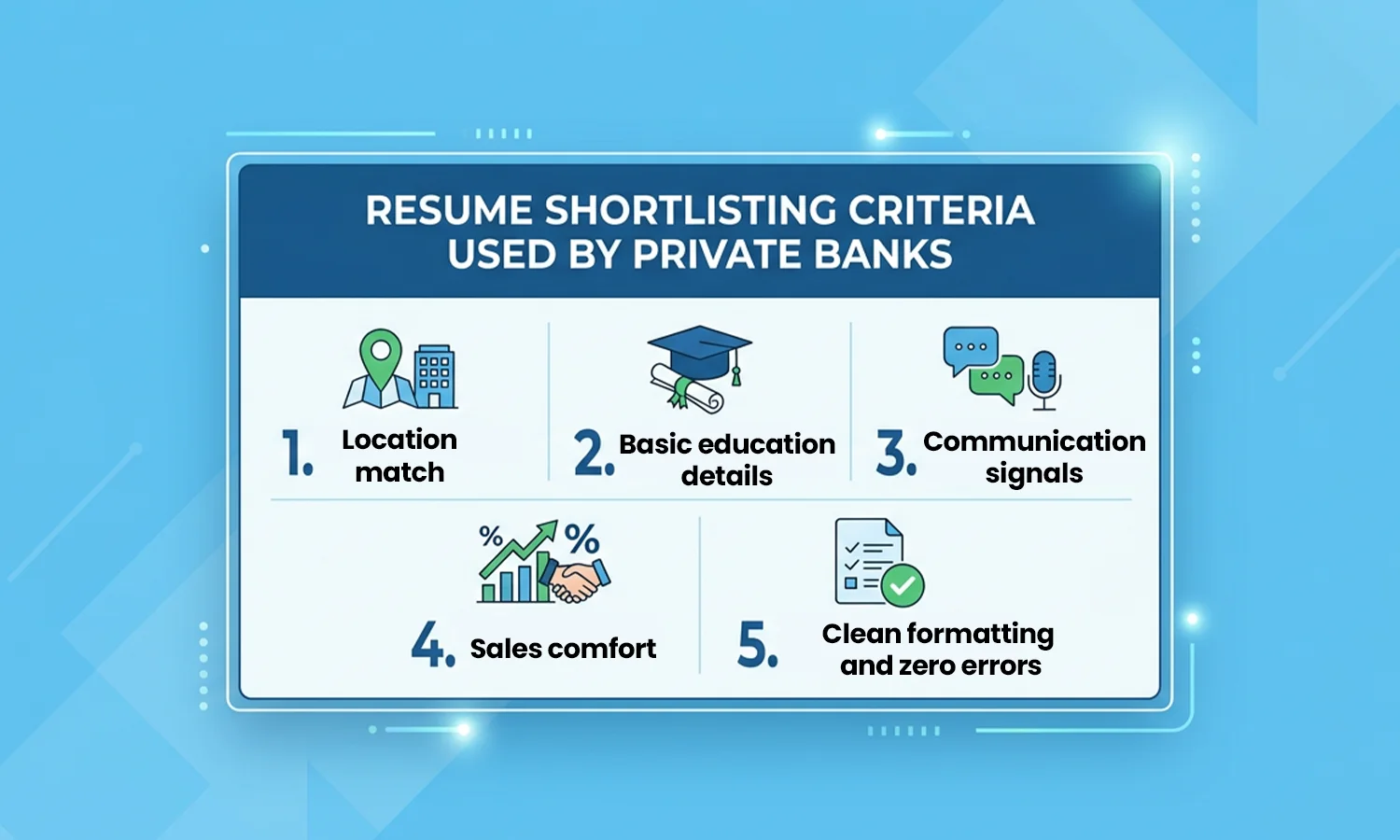
- Location match and joining availability
- Basic education details and consistency
- Communication signals (projects, roles, internships)
- Sales comfort for sales-linked roles
- Clean formatting and zero errors
Role-Wise Screening Before the Interview
Before the main interview, many banks do a quick screening in the private bank hiring process. This is usually a short call or a short in-person check. The screening changes by role:
- For service roles: language comfort, customer tone, patience
- For sales roles: confidence, target comfort, persuasion basics
- For operations roles: accuracy mindset, process interest, system comfort
Interview Rounds in the Private Bank Hiring Process
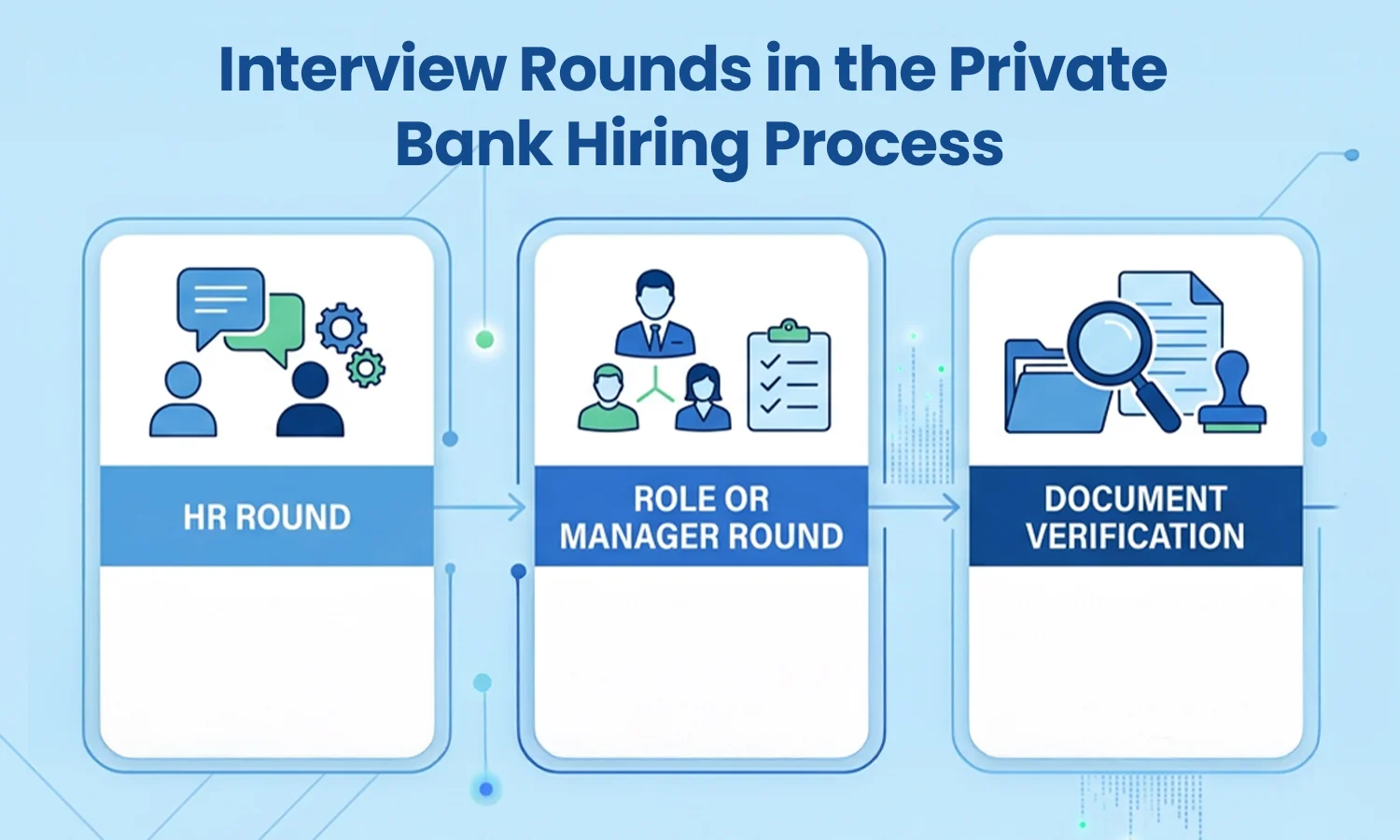
Most interviews follow a simple pattern in the private bank hiring process:
- HR round
HR checks your attitude, communication, location preference, and professionalism. - Role or manager round
This round checks if you understand the job. They may ask about customer scenarios, sales situations, or basic banking terms. - Document verification and final approval
After selection, the bank verifies your documents and background details. Keep your ID, education proofs, and address proof ready.
Some banks have role-specific hiring drives, too. For example, people often search for HDFC Bank hiring when there are active openings, and the selection approach still stays similar: shortlist, screening, interviews, and verification.
How Bank Training Supports the Bank Hiring Process
For candidates who want a guided route, a Job Assured Banking Program can support interview practice and role readiness, so you enter interviews with better clarity and confidence.
Conclusion
The private bank hiring process is not random. It’s a clear journey from sourcing to resume shortlisting to screening and interviews. If you know what the bank checks, you can prepare the right way and improve your chances. Focus on a clean resume, strong communication, and role understanding, and you’ll move faster through the private bank hiring process.

