

Key Takeaways
- Private bank jobs after graduation offer faster growth for skill-ready freshers.
- Choosing the right role early helps you grow steadily in banking.
- Training and interview readiness can reduce rejections and speed up selection.
Introduction
If you’ve completed graduation and want a stable career with faster growth, private bank jobs after graduation can be a strong option. Private banks hire freshers regularly for branch, sales, operations, and customer roles. The key is knowing which roles fit you, what skills banks expect, and how to prepare for interviews without confusion.
Why Private Bank Jobs After Graduation Are a Smart Career Choice
Top Roles Available in Private Banks After Graduation
Eligibility & Skills Required for Private Bank Jobs After Graduation
For most private bank jobs after graduation, banks ask for a graduation degree in any stream. Commerce and finance backgrounds help, but they are not mandatory. What matters more is job readiness. Banks expect clear communication, basic computer comfort, and a professional attitude.
Salary Structure and Career Growth in Private Bank Jobs
How to Get Selected for Private Bank Jobs Faster After Graduation
The fastest way to get selected is to prepare like the job is real, not like it’s only an interview. Start with resume basics, a clean introduction, and practice common questions. Learn basic banking operations and role expectations, especially customer handling and documentation. A short banking course can also help you avoid repeated interview rejections because you become more confident and role-ready.
If you want a clearer route, a Job Assured Banking Program works differently. In the model followed by SRM School of Banking, partner banks conduct interview rounds first to shortlist candidates. Then selected candidates go through a short, focused orientation that prepares them for the exact role before joining. This makes the process more direct and reduces the waiting time many freshers face in normal job hunting for Private bank jobs.
FAQs
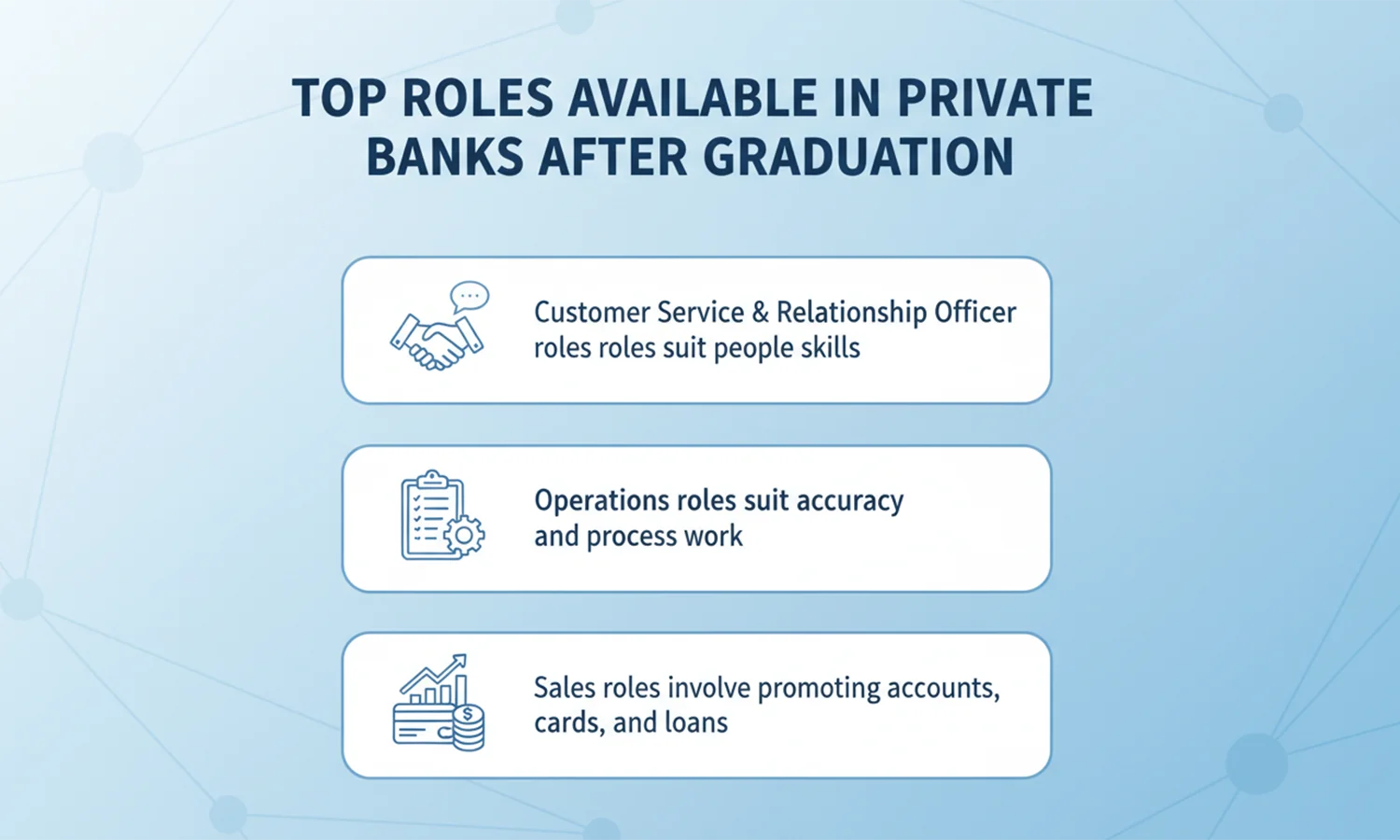
Customer Service Officer, Relationship Officer, Teller, Loan support, and branch operations roles are common entry options.
Clear communication, basic banking knowledge, computer comfort, customer handling, and interview confidence.
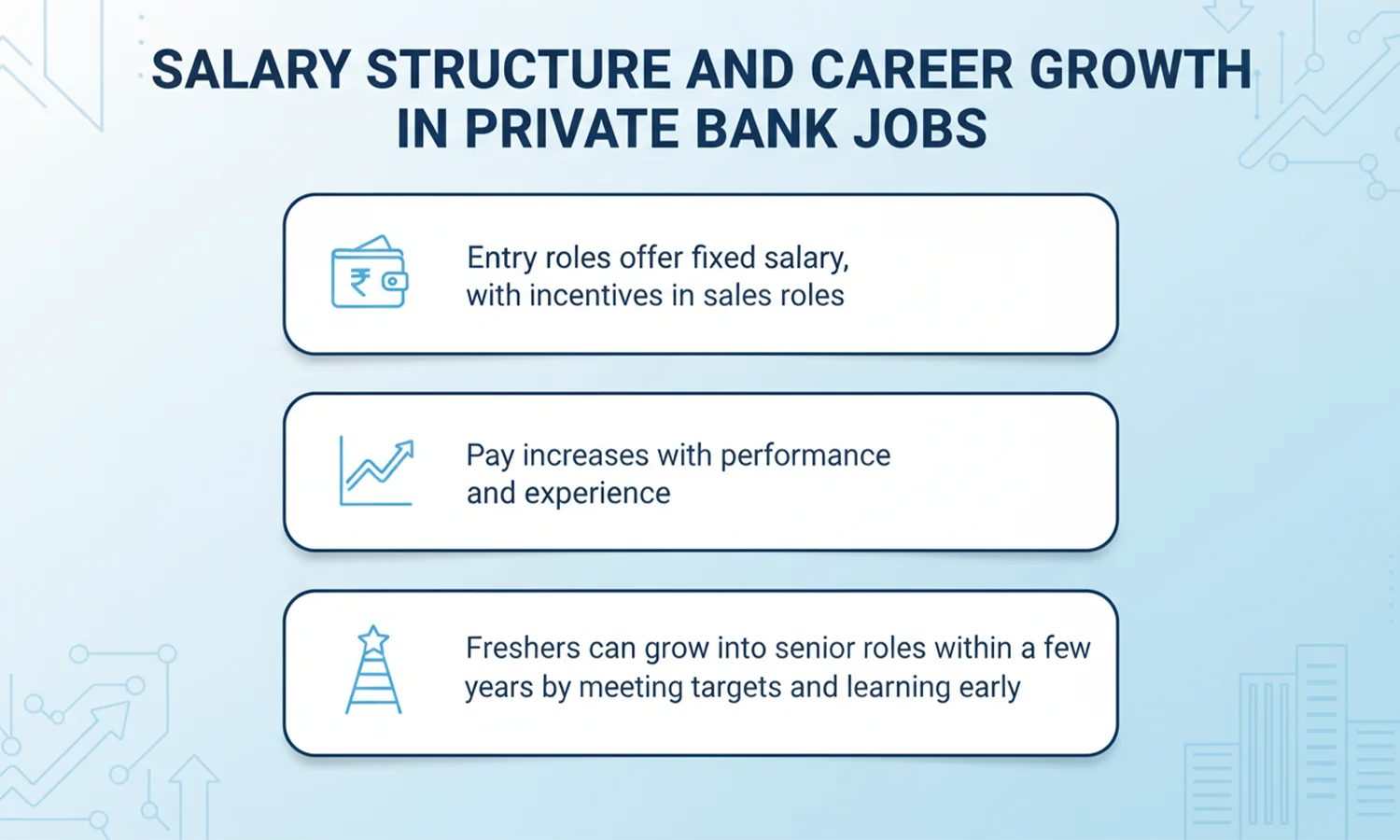
Yes. With good performance and skill building, freshers can move into senior roles within a few years.

